
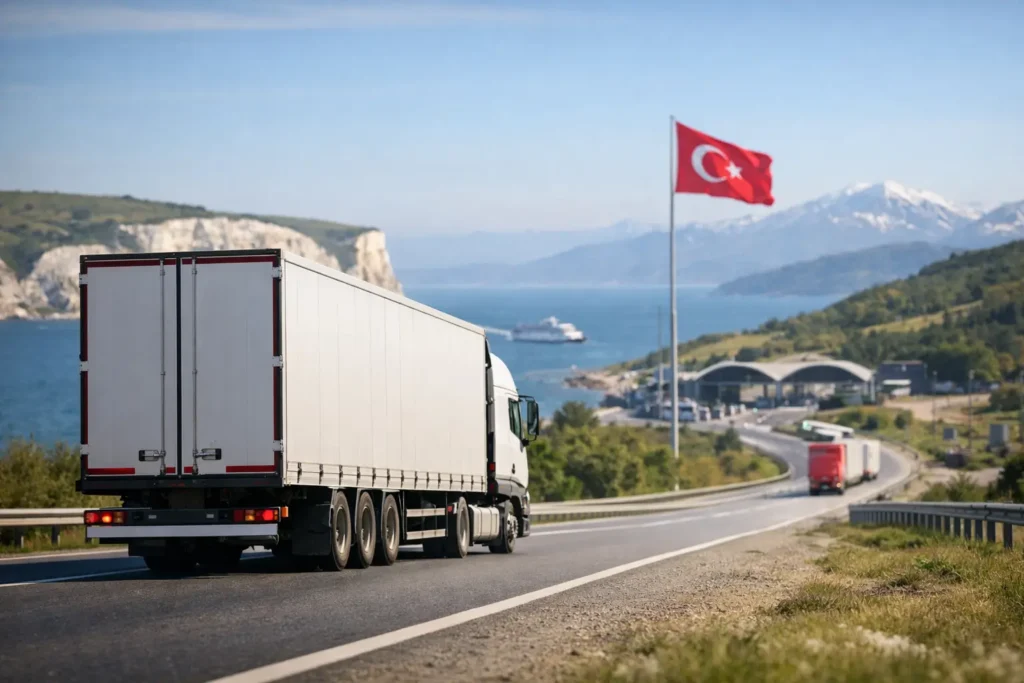
A missed customs detail at the border can cost more than the linehaul itself. When you are moving industrial goods, production materials or urgent replenishment stock, road freight to Turkey from UK is not just about booking a vehicle. It is about choosing a transport plan that protects delivery time, controls border risk and matches the load properly from collection to final delivery.
Turkey remains a key market for UK exporters and a strategic origin point for inbound freight. For many shippers, road is the practical middle ground between air and sea. It offers more flexibility than maritime transport, lower cost than air for many cargo types, and better control over timing, especially when goods need direct collection and delivery rather than multiple handling points.
Why road freight to Turkey from UK still makes commercial sense
For manufacturers, distributors and procurement teams, the main advantage is control. A road movement can be planned around production schedules, loading windows and delivery bookings with far more precision than many multimodal options. That matters when the cargo is valuable, time-sensitive or part of a wider supply chain with little room for delay.
Road freight also suits a broad range of cargo profiles. Standard palletised goods, part loads, full trailer loads, machinery components and specialist industrial shipments can all move on the same corridor with the right vehicle choice and routing. Where air freight becomes too expensive and sea freight too slow or inflexible, road often gives the best operational balance.
There is, however, no single template. Transit time, border performance, customs clearance and the nature of the goods all affect the right solution. That is why experienced shippers tend to look beyond a simple rate per kilometre and focus on service design, communication and contingency planning.
What affects transit time on the UK-Turkey lane
The question most buyers ask first is simple: how long will it take? The honest answer is that it depends on the service level, the route, the type of goods and how clean the paperwork is before departure.
A standard road movement to Turkey can be efficient, but it still crosses multiple jurisdictions and customs stages. Collection point in the UK, ferry or Channel crossing, European transit, export and import formalities, and final-mile delivery in Turkey all influence the timetable. If one stage is not prepared properly, the delay is rarely isolated.
For urgent cargo, direct vehicle solutions can reduce handling and compress transit considerably. Time-critical road services are especially useful for line stoppages, short-stock issues or replacement parts. In those cases, the value lies less in the vehicle itself and more in the speed of dispatch, route control and constant operational follow-up.
Shippers planning regular flows should also remember seasonality. Holiday periods, port congestion, weather disruption and peaks in cross-border traffic can all affect lead times. The safest approach is to build schedules around realistic transit windows rather than best-case assumptions.
The documents that matter most
On this lane, paperwork is operational. It is not an admin task to leave until the day before loading. Commercial invoice accuracy, packing details, commodity descriptions, customs data and any load-specific certificates need to align before departure.
The risk is obvious. A vague product description, mismatch in weights, missing consignee details or confusion over customs value can create avoidable delays at export or import stage. If the cargo is specialised, oversized or regulated, documentation demands can become more detailed again.
That is one reason many businesses prefer to work with a freight partner that manages the process end to end. Strong control at the pre-departure stage usually saves time later in the journey. If your team needs support with planning and shipment setup, the process outlined on the contact page is built around practical shipment information such as origin, destination, weight and dimensions.
Choosing the right service for the shipment
Not every load should move on the same basis. Cost control matters, but so does fit. A standard full load or part load may be the right answer for routine stock movements where timing is important but not critical to the hour. For these shipments, what matters most is dependable planning, route visibility and delivery performance.
Urgent freight is a different decision. If the shipment is supporting a live production issue or committed customer delivery, the cheapest option can quickly become the most expensive. Dedicated express vehicles, rapid dispatch and direct routing often make more commercial sense than accepting a delay.
Then there are non-standard consignments. Heavy, long, high-value or awkward loads need specialist equipment and careful route assessment. Escort needs, loading constraints and permit requirements can all affect planning. A transport partner should adapt the vehicle and operating method to the cargo, not try to fit the cargo into a standard network process.
MAP Transport structures this clearly through classic transport, express transport and exceptional shipments. For buyers comparing options, that distinction matters because it reflects how the load will actually be handled, not just how it is priced.
Cost drivers in road freight to Turkey from UK
Freight buyers know that a headline rate tells only part of the story. The real cost depends on vehicle type, load metres or weight, urgency, route complexity, border formalities and any specialist handling required.
Part loads can be cost-efficient where timing is flexible and the goods are suitable for consolidation. Full loads bring more control and can reduce handling risk. Dedicated express movements cost more per shipment, but they can protect production continuity and contractual delivery commitments. That is often a better commercial outcome than measuring transport spend in isolation.
There are also hidden costs to poor planning. Delays at collection, unsuitable packaging, incorrect cargo data or a mismatch between goods and vehicle type can trigger storage, waiting time or failed delivery charges. Reliable quoting should therefore start with accurate shipment information, not assumptions.
Risk management is where the difference shows
On an international road lane into Turkey, reliability is built before the vehicle departs. Security, confidentiality, driver instructions, route planning and milestone communication all matter. For many industrial shippers, that level of control is more valuable than chasing the absolute lowest rate in the market.
This is especially true when the goods are commercially sensitive, high value or tied to customer deadlines. You need to know who is handling the shipment, how issues will be escalated and whether updates will be proactive rather than reactive. A service-led operator should not wait for the customer to chase every movement event.
Multilingual coordination also has practical value here. It reduces the risk of miscommunication across borders, loading sites and delivery points. On a route involving several countries and operational handovers, clarity is not a soft benefit. It directly supports transit reliability.
How to prepare your shipment properly
If you want fewer surprises, give your transport partner the information they actually need. Collection and delivery postcodes, goods description, number of pallets or packages, gross weight, dimensions, loading method and required delivery date should be confirmed upfront. If there are site restrictions, customs requirements or time-slot rules, those should be declared early as well.
It also helps to be clear about the commercial priority. Is the job cost-sensitive, time-critical or technically difficult? Those are three different planning exercises. The more precisely that is defined at quote stage, the easier it is to assign the right vehicle and service level.
For businesses running repeated flows, consistency pays off. Standardising shipment data, packaging methods and booking procedures makes the lane easier to manage and usually improves both quote speed and operational performance.
When an experienced road freight partner adds value
Any carrier can say they move freight internationally. The real test is what happens when a lane is complex, urgent or exposed to border risk. That is where experience, responsiveness and ownership become commercially useful.
A specialist road freight partner should be able to quote quickly, advise on the realistic service option, identify likely pressure points before dispatch and keep your team informed while the shipment is in transit. That level of involvement is often what turns a difficult international movement into a routine one.
If you are planning road freight to Turkey from UK, treat the booking as a supply chain decision rather than a simple transport purchase. The right solution is the one that fits the cargo, the deadline and the risk profile from the start. When that is done properly, road remains one of the most effective ways to keep freight moving between the UK and Turkey with confidence.