
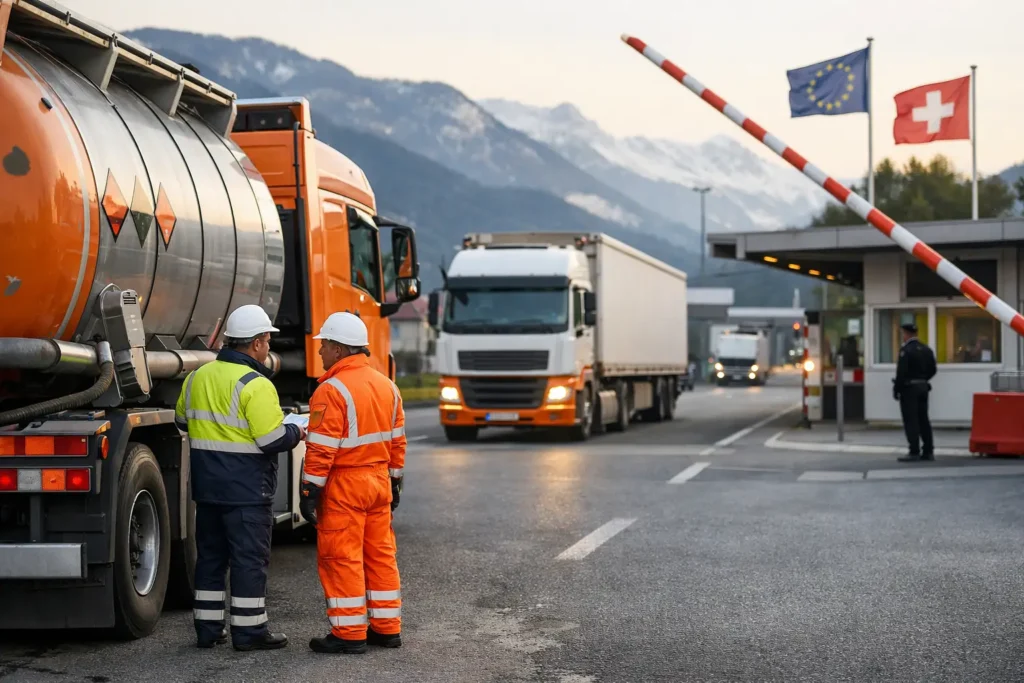
A missed ADR document at a border, the wrong vehicle for a limited quantity load, or a driver briefed too late on tunnel restrictions can turn a standard movement into an expensive problem. In ADR transport in Europe, those issues rarely stay local – they affect delivery slots, production plans, customer commitments and sometimes regulatory exposure across several countries at once. For supply chain managers moving chemicals, industrial residues, paints, batteries or regulated materials, the challenge is not simply getting a load from A to B. It is doing it on time, with the right paperwork, the right routing and clear accountability at every step.
Why ADR transport Europe is operationally demanding
ADR road freight is shaped by more variables than standard cross-border transport. Classification matters first. If the product is assigned to the wrong UN number, packing group or transport category, the rest of the shipment plan can be flawed from the outset. That has practical consequences: vehicle marking, equipment requirements, driver instructions and route planning may all need to change.
Cross-border moves add another layer. Even within Europe, interpretation and enforcement can vary by country. A route through France, Belgium and Germany may look straightforward on paper, but restrictions on tunnels, urban access windows, ferry acceptance or weekend driving rules can alter the workable plan. On UK, Swiss or Turkish lanes, customs formalities join the risk profile, which means ADR compliance and border compliance have to be managed together rather than as separate tasks.
This is one reason regulated transport creates disproportionate disruption when something goes wrong. According to the European Commission road safety data{:target= »_blank »}, dangerous goods incidents are relatively rare compared with overall freight traffic, but the operational and legal consequences are far higher when compliance fails. For a manufacturer or distributor, that means prevention matters more than firefighting.
The documents and checks that prevent avoidable delays
In practice, most ADR delays come from routine mistakes rather than extraordinary events. A transport partner should be checking the shipment details long before collection: product description, UN number, class, packing group, quantity, packaging type, loading method and whether any exemptions apply. If one of those details is missing, collection should not proceed on assumptions.
The transport document itself needs to be accurate and complete. So do the written instructions and any accompanying customs paperwork where relevant. On routes involving the UK, Switzerland or Turkey, customs errors can hold a compliant ADR consignment at the frontier just as easily as a dangerous goods issue. That is why operational teams need one joined-up workflow covering both regulatory streams.
A useful reference point is the UNECE ADR agreement{:target= »_blank »}, which sets the framework for international carriage of dangerous goods by road. The rules are clear enough in principle, but shipment execution still depends on accurate data from shipper to carrier to consignee.
A practical example: a supplier of industrial coatings books a palletised shipment from northern Spain to southern Germany. The goods are ADR, but sent under a limited quantity regime. If the booking only says “paint products” and omits packaging details, the operator cannot confirm whether full ADR obligations apply, whether placarding is needed, or whether a smaller dedicated vehicle is acceptable. That uncertainty costs time at dispatch and can force a same-day replan.
Vehicle choice matters more than many shippers expect
The cheapest vehicle on paper is not always the lowest-cost option once ADR restrictions are considered. In ADR transport in Europe, the right vehicle depends on the substance, packaging format, load security requirements, lead time and destination constraints.
For some flows, a dedicated van or smaller vehicle is the safer option operationally, especially when the aim is to reduce handling points and keep urgent goods moving directly. For others, a standard full-load or part-load movement remains perfectly viable if the route, loading plan and compliance checks are properly aligned.
This is where tailored planning makes a measurable difference. A time-critical shipment of regulated batteries from Belgium to a production site in northern Italy might need direct collection, controlled handover and fast delivery to avoid a line stoppage. A non-urgent ADR movement of packaged chemical goods to Scandinavia may be better planned around ferry schedules, weather risk and weekend restrictions. Same regulatory framework, very different execution model.
MAP Transport’s service structure reflects that reality. Standard flows, urgent deliveries and specialist movements should not be treated as the same operational product. On its road freight services page, the distinction between Classic, Xpress and Exceptional services mirrors the way supply chain teams actually buy transport: by risk, urgency and shipment profile, not by a one-size-fits-all model.
Customs and ADR on complex routes
Some of the most sensitive ADR moves are not the longest. They are the ones where dangerous goods compliance and customs formalities intersect. UK, Swiss and Turkish lanes are a good example because time lost at the border quickly erodes the margin for error in delivery planning.
Take a shipment of regulated industrial material moving from France to the UK. The ADR side may be perfectly prepared, but if commodity codes, EORI details or border references are incomplete, the lorry can still be held. The same applies in the opposite direction. When this happens, the impact reaches beyond freight cost. Production sequencing, unloading availability and customer service metrics all suffer.
For Turkey and Caucasus-linked road flows, transit planning becomes even more important. Border conditions can change quickly, and operators need realistic contingency time built into the route. The IRU market intelligence and border reporting{:target= »_blank »} is useful for understanding how road freight conditions evolve, but execution still depends on active coordination during transit.
Operationally, one of the best ways to reduce risk is to assign ownership clearly. Someone must be responsible for validating shipment data before loading, someone for border document consistency, and someone for monitoring progress and escalating issues early. Without that discipline, ADR transport becomes reactive very quickly.
How urgent ADR shipments should be managed
Urgent ADR transport is where weak processes show up fastest. If a plant is waiting for a regulated input or a customer needs same-day replacement material, there is little room for incomplete instructions or unclear responsibilities.
Speed matters, but control matters more. The most reliable urgent movements usually follow a simple pattern: immediate data validation, rapid vehicle allocation, direct communication with the loading point, active transit monitoring and delivery confirmation without delay. If any of those stages is improvised, the shipment may move fast at the start and still arrive late.
A common scenario is an emergency request for regulated goods from the Benelux region to a factory in eastern France after a supplier failure. The temptation is to focus only on collection time. In reality, the better question is whether the chosen carrier can verify ADR details at once, source a compliant vehicle quickly and keep the shipper informed throughout the movement. Urgency without visibility is just unmanaged risk.
For companies handling recurring urgent flows, it is worth reviewing whether transport providers can commit to response speed in practical terms. Fast quoting, direct access to an operator and updates during the journey are not extras in this segment. They are part of the service requirement.
What supply chain managers should ask before booking ADR freight
The most useful ADR questions are operational, not theoretical. Can the transport team verify the classification data before collection? Do they handle customs-facing routes where needed? Can they adapt the vehicle to the load and urgency, rather than forcing the load into a fixed network pattern? Will they proactively report issues during transit?
Those questions are especially relevant for businesses shipping regulated residues, chemicals, coatings, batteries or industrial products into markets with added complexity. If your flows involve the UK, Switzerland, Turkey or Scandinavia, route design and document control should be discussed before the first booking, not after the first problem.
It also helps to work with a partner that gives a clear path from enquiry to execution. On MAP Transport’s contact page, the process is built around practical shipment data such as weight, dimensions, origin and destination – exactly the information procurement and logistics teams already manage internally. That reduces friction and speeds up decision-making.
Reliable ADR transport in Europe is not about making dangerous goods movement look simple. It is about reducing uncertainty through better planning, better communication and realistic control over route, compliance and timing. When those pieces are aligned, regulated freight becomes far more predictable, even on urgent or customs-sensitive lanes.
For companies reviewing ADR flows, the next useful step is often a lane-by-lane conversation about where delays actually start – at booking, at loading, at the border or during handover. That is usually where better transport decisions begin.
Need support on your transport flows? Contact our team for a tailored solution.
Have a question or need a quote? Contact us at (+34) 943 62 95 77 (ask for Raquel) or by email at lo*******@**********rt.com
