
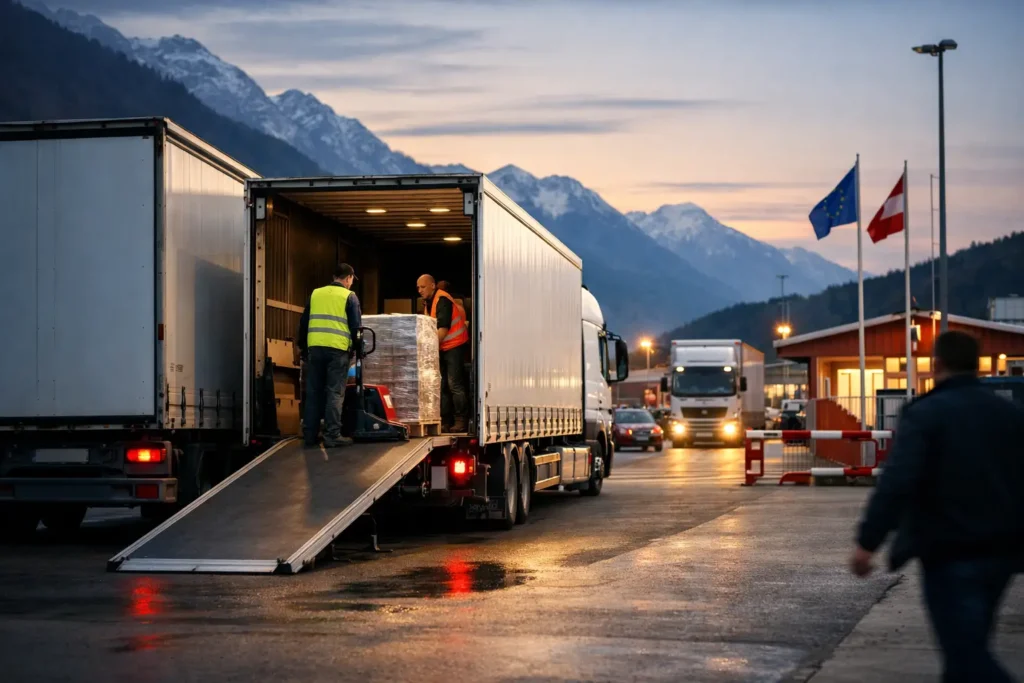
A production line in northern France stops for want of one missing component from Belgium. A medical device shipment held at the Swiss border misses a booked installation slot. A supplier in Turkey confirms late, but the customer in Germany still expects delivery tomorrow. This is the real context behind the real reason why urgent transport is exploding in Europe: not impatience, but tighter operating models, cross-border complexity and a shrinking tolerance for delay. For supply chain managers, urgent road freight is no longer an exception reserved for crises. It is becoming a structural part of how European industry keeps moving.
The real reason why urgent transport is exploding in Europe
The simplest explanation is usually the wrong one. Urgent transport is not growing because every business suddenly wants premium service. It is growing because many supply chains have removed the buffers that used to absorb disruption.
Manufacturers and distributors have spent years reducing stock, tightening production planning and rationalising supplier networks. That improves working capital, but it also means a delay of a few hours can have disproportionate cost. When there is less inventory in the system, transport carries more operational risk than before.
That pressure is visible across Europe. According to the International Road Transport Union{:target= »_blank »}, road freight remains the backbone of inland freight movement in Europe, which means any change in delivery expectations lands first on road transport. At the same time, Eurostat{:target= »_blank »} data consistently shows the scale of intra-European trade flows that depend on reliable cross-border movement. More trade, less buffer, tighter lead times – that is the combination driving urgent shipments upwards.
The operational insight is straightforward: urgent transport demand often starts as a planning issue upstream, then becomes a transport issue downstream. By the time a buyer or logistics manager requests an express vehicle, they are usually paying to protect production, customer service or a contractual deadline.
Leaner inventories have changed the cost equation
For many transport buyers, the key shift is not freight pricing. It is the cost of non-delivery.
A dedicated van moving parts overnight from the Netherlands to western Germany may look expensive on a rate sheet. But if that movement prevents a line stoppage, avoids penalties or protects a time-sensitive export, the transport cost is marginal compared with the business impact.
This is why urgent road freight is expanding across sectors such as automotive supply, industrial machinery, electronics and specialist manufacturing. Companies are accepting higher unit transport costs on selected loads because the alternative is worse. In practice, transport teams are being asked to make decisions based on total operational risk, not just freight spend.
A concrete example: a metal components supplier in Spain misses a consolidation cut-off for a customer near Lyon. A standard groupage option adds 24 hours. If the consignee has installation labour booked and a downstream dispatch to Switzerland the following morning, that extra day can trigger a chain of cost – idle labour, missed slot, customs rescheduling and delayed invoicing. A same-day dedicated vehicle suddenly becomes the sensible option.
This is also why a one-size-fits-all model struggles. Some urgent loads need a van within hours. Others need a direct lorry with a team that can monitor documents, border timing and delivery windows. Choosing the wrong vehicle or service level can waste money without reducing risk.
If your flows include recurring emergency shipments, it is worth reviewing whether the issue is supplier discipline, unrealistic cut-offs, or route design. But even well-run supply chains still need urgent capacity. The difference is that they use it strategically.
Borders, customs and route complexity are fuelling urgency
Not every urgent shipment begins as urgent. Many become urgent because cross-border friction narrows the available delivery window.
That is especially true on complex European lanes involving the UK, Switzerland and Turkey, where customs formalities can quickly turn a standard movement into a time-critical one. A document mismatch, delayed MRN, incomplete commodity detail or consignee timing issue can force transport planners to recover lost hours later in the route.
The European Commission’s customs guidance{:target= »_blank »} makes clear how documentation and compliance shape movement across borders. In theory, this is manageable. In real operations, it means urgency often comes from administration as much as distance.
Consider a shipment from Italy to the UK with a firm delivery booking at a manufacturing site. If customs clearance is delayed late afternoon and the delivery slot remains fixed for the next morning, the transport mode may need to change immediately – direct vehicle, revised routing, active follow-up with the driver and consignee, and close coordination around border timing. The same applies to Swiss routes, where missed paperwork can quickly affect final-mile commitments.
For supply chain managers, the lesson is practical. On customs-sensitive routes, urgent transport should never be treated as a simple “faster van” request. It requires document control, route knowledge and operational follow-up.
For more on tailored time-critical solutions, see MAP’s urgent transport service.
Customer expectations are stricter, even in B2B freight
There is another reason urgent transport is rising: B2B customers now expect the kind of reliability once associated mainly with premium consumer delivery.
Not the same service model, of course, but the same intolerance for uncertainty. Industrial buyers want exact ETAs, rapid status updates and credible recovery plans when something slips. “It will arrive tomorrow” is no longer enough if installation teams, production schedules or export bookings depend on the load.
That shift matters because it changes the threshold at which companies escalate to express transport. In the past, a one-day delay might have been inconvenient. Now it can damage service levels, trigger chargebacks or jeopardise a strategic account.
A recent Financial Times{:target= »_blank »} theme across European industry reporting has been resilience under pressure – businesses are redesigning operations to cope with volatility, but they are also demanding faster response from partners when plans change. Transport providers are expected to react in real time, not just execute fixed schedules.
This puts pressure on freight buyers to choose partners that can quote quickly, confirm realistic transit options and keep stakeholders informed throughout the journey. Speed without visibility is not enough. In urgent transport, communication is part of the service.
If you manage recurring flows across multiple countries, this is where a specialist partner can reduce noise. A multilingual operations team, direct contact and route-specific planning often matter more than headline transit promises.
How to respond without turning every shipment into an emergency
The growth in urgent transport does not mean every shipper should move more freight on an express basis. That would be expensive and, in many cases, unnecessary. The better response is to separate unavoidable urgency from avoidable urgency.
There are three areas worth reviewing. First, look at where urgent orders really come from. If most arise from one supplier, one border process or one customer booking rule, the fix may sit outside transport. Second, map which routes genuinely need rapid-response capacity on standby. Third, work with a carrier that can match the vehicle and service level to the shipment rather than over-specifying every move.
A practical framework often helps:
- Use classic road freight for stable, planned flows with realistic lead times.
- Reserve express and ultra-express capacity for production-critical, customs-sensitive or high-penalty shipments.
- Build route playbooks for the UK, Switzerland and Turkey, where delay drivers are more predictable.
- Define escalation rules internally so buyers know when urgent transport is commercially justified.
This is where tailored planning makes a measurable difference. A dedicated van for 400 kg of critical parts is sensible. Sending a full articulated lorry for the same shipment is not. The opposite is also true – underestimating the load or route requirement can create a second failure after the first.
Companies that handle urgent flows well usually have two things in place: fast internal decision-making and a freight partner that can react without wasting time on unnecessary handovers. MAP has built its model around that principle, from road freight services across Europe to direct operational follow-up and route-specific support.
Urgent transport is growing because supply chains are under more pressure, not less
The real reason urgent transport is exploding in Europe is that the margin for error has become smaller across the whole supply chain. Leaner stock, complex borders, fixed customer windows and higher service expectations have made time-critical road freight a normal management tool, not a rare exception.
For transport buyers, the right question is not whether urgent shipments can be avoided entirely. It is whether they are being managed intelligently – with the right service level, the right documentation and the right partner when hours matter. If your business is seeing more last-minute requests on European routes, that is usually a sign of structural pressure somewhere in the chain, not just poor luck.
When those moments happen, execution matters. You need clear communication, realistic transit planning and a team that understands what is at stake beyond the load itself. If you want to review urgent flows, customs-sensitive lanes or recurring delivery risks, you can also contact MAP Transport.
Need support on your transport flows? Contact our team for a tailored solution.
Have a question or need a quote? Contact us at (+34) 943 62 95 77 (ask for Raquel) or by email at lo*******@**********rt.com