
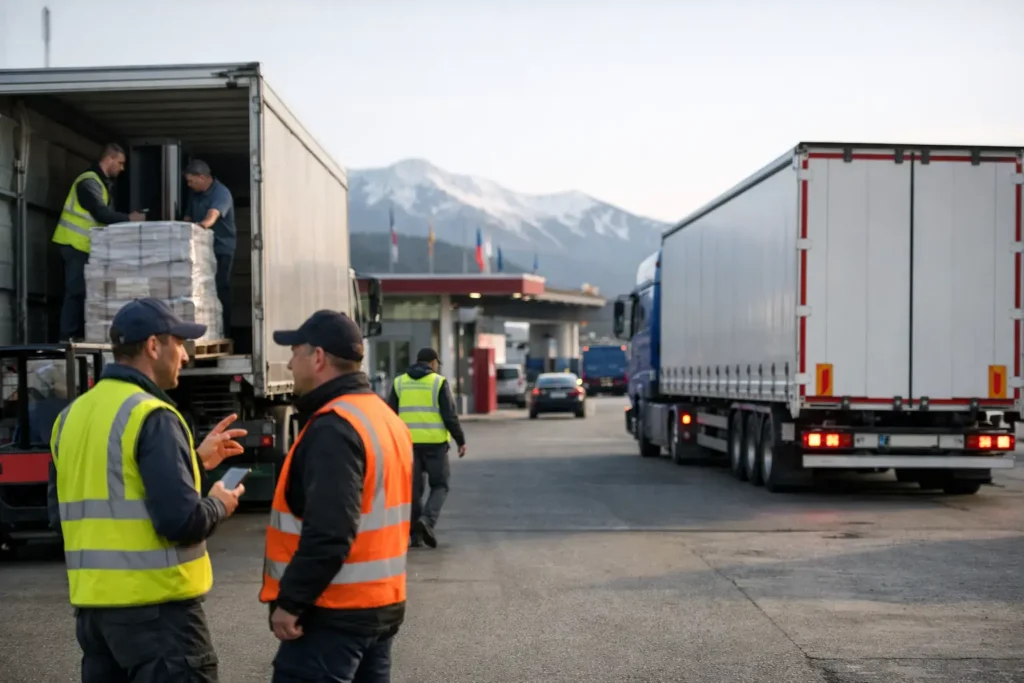
A production line is waiting on a missed pallet. A customs document needs correcting before a vehicle reaches the border. A client moves a delivery window forward by six hours with no warning. This is where the need for high reactivity stops being a soft requirement and becomes an operational one. For supply chain managers handling European road freight, the issue is not simply speed. It is the ability to respond fast, make the right transport decision quickly, and keep control when routes, paperwork or timing shift during transit.
Why the need for high reactivity has become a daily issue
Road freight across Europe is less forgiving than it was a few years ago. Lead times are tighter, stock buffers are leaner, and cross-border movements face more variables than many planning models allow for. A standard shipment from Spain to the UK or from France to Turkey can still be planned well, but the margin for error is much smaller once customs checks, ferry capacity, weather conditions or customer-side booking changes enter the picture.
That is one reason the need for high reactivity is now built into procurement decisions. Logistics teams are no longer judging a transport partner only on rate per load. They are also looking at response time to quote, speed of escalation, quality of shipment follow-up and ability to switch from a standard movement to an urgent solution without losing visibility.
The pressure is measurable. According to the International Road Transport Union, driver shortages continue to affect capacity across Europe, which makes last-minute replanning more difficult and more expensive. At the same time, border and customs processes remain a serious delay factor on non-EU routes, especially where documentation quality is inconsistent.
In practice, this means reactivity is not about being busy or answering emails quickly. It is about protecting delivery performance when conditions change.
High reactivity in transport is not the same as urgency
Many shippers equate high reactivity with express transport. Sometimes that is correct, but not always. Urgent transport is one service category. High reactivity is a broader operating capability.
A reactive freight partner can handle an UltraExpress movement for critical goods, but it should also be able to prevent a standard shipment from becoming urgent in the first place. That might mean identifying a document discrepancy before departure, assigning a more suitable vehicle based on dimensions and unloading constraints, or rerouting around congestion before the delay affects the final delivery slot.
This distinction matters because the cheapest shipment can become the most expensive if a slow response creates knock-on costs. One delayed industrial component may trigger idle labour, missed installation windows or contractual penalties. In sectors such as manufacturing, metals or industrial supply, the transport spend is often smaller than the cost of disruption.
A good example is a part-load movement from northern Italy to the UK with a fixed delivery appointment at a production site. If the carrier only reacts after the ferry crossing is missed, the transport problem is already commercial. If the issue is spotted earlier and the routing is changed in time, the shipment may still arrive within the booked window with no downstream impact.
Where delays expose the need for high reactivity most clearly
Some lanes are naturally less tolerant of slow decision-making. The UK, Switzerland and Turkey stand out because border formalities and document control can quickly turn a minor issue into a full-day delay.
On UK flows, post-Brexit customs has made pre-checking paperwork more important than ever. If commodity codes, invoice values or EORI details are wrong, the vehicle may be held or the declaration may need reworking while the consignment is already in motion. The official UK government guidance on moving goods makes clear how much depends on accurate declarations and timing.
Switzerland adds another layer, with customs procedures that require precision even for experienced exporters. Turkey brings similar complexity, especially where transit formalities and timing at border crossings can shift unexpectedly. These are not unusual routes, but they are routes where slow communication or generic handling causes avoidable delay.
This is also where tailored service design matters. Not every shipment needs the same vehicle, routing or response protocol. A small urgent consignment may need a dedicated van and direct control from pickup to delivery. A larger standard movement may only need close milestone tracking and a proactive contingency plan. The point is to match the solution to the risk.
For businesses shipping regularly into these markets, working with a partner used to international road freight across Europe can reduce the number of situations that become critical in the first place.
Operational signs that your transport flow needs more reactivity
Most companies do not describe the problem as a need for high reactivity at the start. They describe the symptoms.
Quotes arrive too slowly, so urgent shipments are booked at the last minute. Updates only come after the customer asks. Customs issues are discovered when the lorry is already near the border. Standard deliveries repeatedly turn into fire-fighting exercises. None of these points is dramatic on its own, but together they show that the transport flow is not responsive enough for current demand.
One useful test is to look at the first two hours after a shipment exception. What happens when collection fails, a consignee changes the delivery slot, or paperwork is challenged? If your provider can confirm the issue but cannot present clear next steps quickly, that gap is costing time.
Another sign is overuse of premium transport. If your team is forced to book too many emergency vehicles because standard movements are not tightly managed, the issue may be less about customer volatility and more about weak operational control. A specialist express transport service should support real urgency, not compensate for poor responsiveness elsewhere.
How to build reactivity into cross-border road freight
Improving reactivity starts before collection. The strongest operators reduce decision time by collecting the right shipment data early: weight, dimensions, Incoterms, loading constraints, customs status, and delivery deadlines. That sounds basic, but missing one of those fields can create hours of avoidable back-and-forth later.
The second step is escalation clarity. Supply chain managers should know who owns the shipment, who can authorise changes, and how quickly alternatives can be proposed. Reactivity is often lost not on the road, but between inboxes.
The third step is using the right service level from the outset. Standard road freight is suitable for many flows, but not all. If the goods are line-stoppers, time-sensitive spare parts or materials linked to a narrow unloading window, the transport plan should reflect that from the beginning. Sending a critical shipment through a generic process because the load looks simple on paper is a common mistake.
A practical example: a manufacturer in Spain needs replacement industrial components delivered to southern Germany after a quality issue on site. The original plan was a next-day groupage movement, but the delivery window tightens to the same evening. A reactive operator does not just say the first option is no longer possible. It checks collection readiness, assigns a dedicated vehicle, confirms direct delivery timing and keeps the shipper informed throughout the journey. The difference is not only speed. It is control under pressure.
There is also a compliance angle. For customs-sensitive routes, reactivity depends on document discipline. The European Commission’s customs guidance is clear that procedures and declarations must be aligned with the movement. Fast action cannot compensate for weak data.
Why tailored transport support matters more than generic capacity
When companies review freight performance, they often focus on whether enough vehicles were available. Capacity matters, but high reactivity depends just as much on how the movement is managed. A provider with access to the right mix of vehicles, multilingual coordination and active follow-up can solve issues faster than one offering only basic linehaul capacity.
That is particularly relevant for businesses balancing routine imports and exports with occasional urgent or exceptional loads. The transport partner needs to shift between service types without losing accountability. If a standard shipment becomes critical, the handover from one mode of handling to another should be immediate and informed.
This is where experience on difficult routes and non-standard shipments becomes commercially useful rather than simply impressive. Teams managing flows into the UK, Switzerland or Turkey know that delay risk often comes from small operational details. The faster those details are spotted, the less likely they are to become expensive.
For shippers reviewing their current setup, it is worth assessing whether their provider is offering transport only, or actual operational support. If the answer is unclear, it may be time to contact a road freight specialist and test response times before the next urgent movement forces the decision.
High reactivity is not a premium extra. It is what keeps a standard shipment from becoming a customer issue, a customs issue or a production issue. And when the route is complex or the timing is tight, that difference is often what protects margin as much as service.
Need support on your transport flows? Contact our team for a tailored solution.
Have a question or need a quote? Contact us at (+34) 943 62 95 77 (ask for Raquel) or by email at lo*******@**********rt.com
https://shorturl.fm/E8klq