
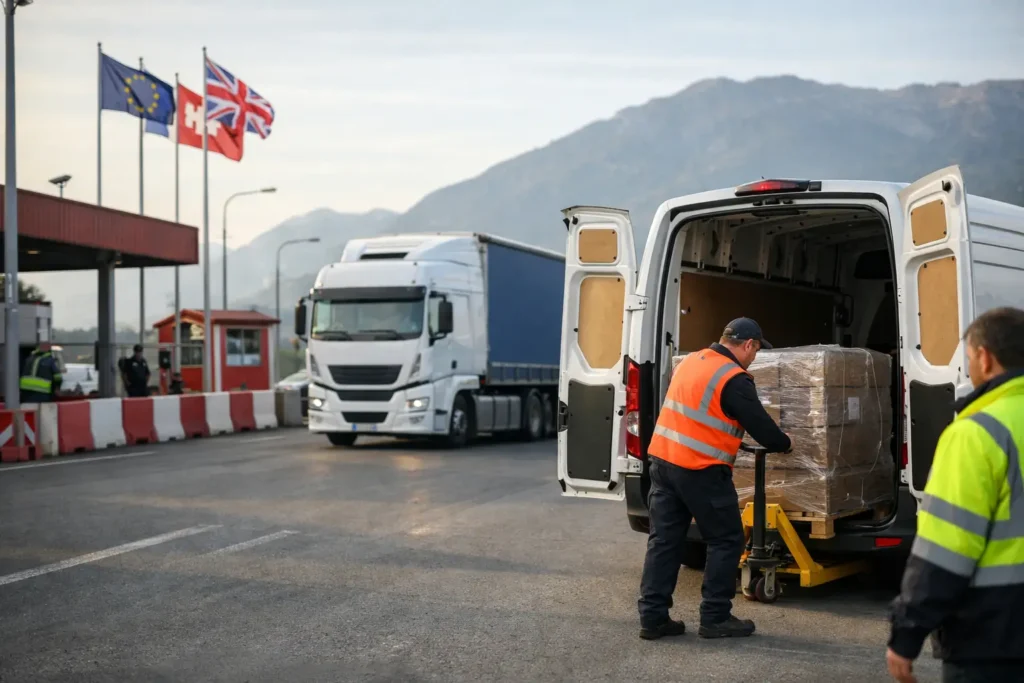
A production line does not stop because a carrier is 12 hours late on paper rather than 24 in practice. For supply chain managers, urgent road freight is rarely about speed alone. It is about whether the shipment can actually move when customs, driver hours, border queues, ferry schedules and vehicle availability start working against the plan. That is where express lorry freight Europe becomes a decision about risk control, not just transport. If the load is critical, the real question is simple: what will keep it moving, and what could still slow it down?
Why express lorry freight Europe is not just “faster transport”
Urgent road freight tends to be bought under pressure. A supplier misses a deadline, a customer brings forward a delivery slot, or a plant needs a component before the next shift. In those moments, many teams focus on collection time and headline transit time. That makes sense, but it is only part of the picture.
In practice, express transport works when the operation is built around time sensitivity from the start. That means selecting the right vehicle, checking restrictions on the route, confirming the exact loading conditions and validating the delivery point before dispatch. A van moving immediately can outperform a larger vehicle that needs extra planning, but the reverse is also true if the freight volume changes the route options or loading pattern.
This is particularly relevant on cross-border lanes where one delay can erase the benefit of a rapid collection. According to the European Commission, road freight remains the dominant inland freight mode in Europe, which means capacity pressure, congestion and regulatory variation are part of daily operations rather than rare exceptions. Speed matters, but execution matters more.
Where urgent road freight usually goes wrong
The weak points in express lorry freight Europe are often predictable. The problem is that they are discovered too late.
The first issue is incomplete shipment data. If dimensions, weight, stackability or loading method are inaccurate, the wrong vehicle may be dispatched. That can lead to failed collections, reloading delays or route changes. For urgent moves, even a one-hour mistake at origin can become a missed delivery window at destination.
The second issue is border and customs friction. This remains a major factor on routes involving the UK, Switzerland and Turkey. Even when the transport itself is straightforward, paperwork errors can hold a vehicle far longer than the linehaul would suggest. The UK government’s border guidance and Swiss customs procedures make one point clear: documents are not an admin detail, they are part of the transit plan.
The third issue is assuming every urgent load should move on the same service model. Some shipments need dedicated direct transport. Others can move efficiently on a tightly managed express network. It depends on the tolerance for delay, handover risk and route complexity.
A simple example illustrates this. If a manufacturer in northern Spain needs machine parts delivered to eastern France before the next morning, a dedicated van may be the safest option. If the same shipment is larger, requires tail-lift handling or must cross a border with more document checks, the operational set-up changes immediately. The urgency is the same, but the solution is not.
Choosing the right set-up for express lorry freight Europe
The best urgent transport decisions are usually made before the vehicle is assigned. That sounds obvious, yet it is where many rushed bookings lose time.
Start with the shipment itself. Is it a small but critical consignment, a palletised load, or a high-value industrial part that needs secure direct delivery? The answer affects whether a van, dedicated lorry or specialist vehicle makes the most sense. A smaller vehicle can often collect faster and travel more directly, but if the load is close to the limit or loading conditions are difficult, forcing it into a van creates risk rather than saving time.
Then look at the route. A standard intra-EU movement is one thing. A time-critical load into the UK, Switzerland or Turkey is another. On those lanes, transit planning has to include border procedures, possible waiting time and document checks from the outset. The International Road Transport Union has repeatedly highlighted border delays as a material operational issue for international hauliers. That matters because urgent freight plans often fail at the border, not on the motorway.
Finally, define what “on time” really means. Does the consignee need delivery before noon, before a production slot, or simply on the same day? Precise delivery commitments help the transport team build a realistic operating plan instead of relying on optimistic transit estimates.
Customs and border control on time-critical routes
For many European shippers, the hardest urgent moves are not the longest ones. They are the ones that combine speed with customs exposure.
UK movements are a clear example. Even when the crossing is short, a missing commodity code, incomplete invoice or unclear Incoterms instruction can disrupt the full schedule. The same applies to Switzerland, where customs formalities remain a key operational step despite the country’s close trading links with the EU. Turkey adds another layer, especially when documentation quality varies across the supply chain.
This is why experienced operators treat customs as part of the transport service, not a separate function. On urgent shipments, the objective is to reduce preventable waiting time. That means checking documents before departure, confirming who is acting as exporter or importer of record where relevant, and making sure the consignee is ready to receive and clear the goods if needed.
A useful operational insight is this: if a shipment is genuinely urgent, document readiness should be confirmed before vehicle dispatch, not while the driver is already en route to collection. That one discipline prevents a surprising number of delays.
Cost, risk and when express is worth it
Express freight costs more than standard road transport. For procurement teams, that is obvious. The harder part is judging when the extra spend is justified.
The answer usually sits in the cost of failure. If a delayed component stops production, misses an installation slot or triggers contractual penalties, the premium for urgent transport is often modest by comparison. If the shipment is important but not business-critical, a standard service with tighter monitoring may be the better choice.
This is where tailored planning matters. Not every urgent request needs the highest-speed option available. Sometimes the right answer is a same-day dedicated vehicle. Sometimes it is a controlled next-day movement with close follow-up. Sometimes it is a specialist set-up for non-standard freight that cannot be treated like a routine pallet move.
The key is to avoid buying speed you do not need while still protecting the shipment from known risks. That balance is what separates efficient transport buying from reactive spending.
What good operational control looks like in urgent freight
When supply chain managers assess express providers, visibility is often as important as transit time. A fast shipment that goes quiet for six hours creates its own operational problem, especially if production, customer service or site teams are waiting for updates.
Good control in express lorry freight Europe usually comes down to a few practical behaviours. The transport team should confirm feasibility quickly, challenge incomplete booking data, match the vehicle to the job and provide updates that reflect what is actually happening on the road. That sounds basic, but under pressure it is exactly what protects delivery performance.
This is also where multilingual coordination becomes useful on cross-border work. If origin, transit and destination teams are working in different languages, small misunderstandings can produce very real delays. Fast transport depends on clear communication as much as physical movement.
For businesses moving urgent freight regularly, the strongest model is often a partner-led approach rather than a case-by-case scramble. A transport specialist that already understands your loading profile, your typical lanes and your escalation points can move much faster when the unexpected happens.
After nearly 40 years handling international road freight, MAP Transport sees the same pattern repeatedly: urgent shipments succeed when the planning is specific, the communication is direct and the route risks are addressed before the wheels turn. For companies managing critical flows across Europe and more complex lanes such as the UK, Switzerland or Turkey, that level of control is often what protects both time and cost.
If your business depends on urgent cross-border transport, the priority is not to find the cheapest rapid option on paper. It is to secure a service that can still deliver when the route becomes difficult. Need support on your transport flows? Contact our team for a tailored solution.
Have a question or need a quote? Contact us at (+34) 943 62 95 77 (ask for Raquel) or by email at lo*******@**********rt.com