
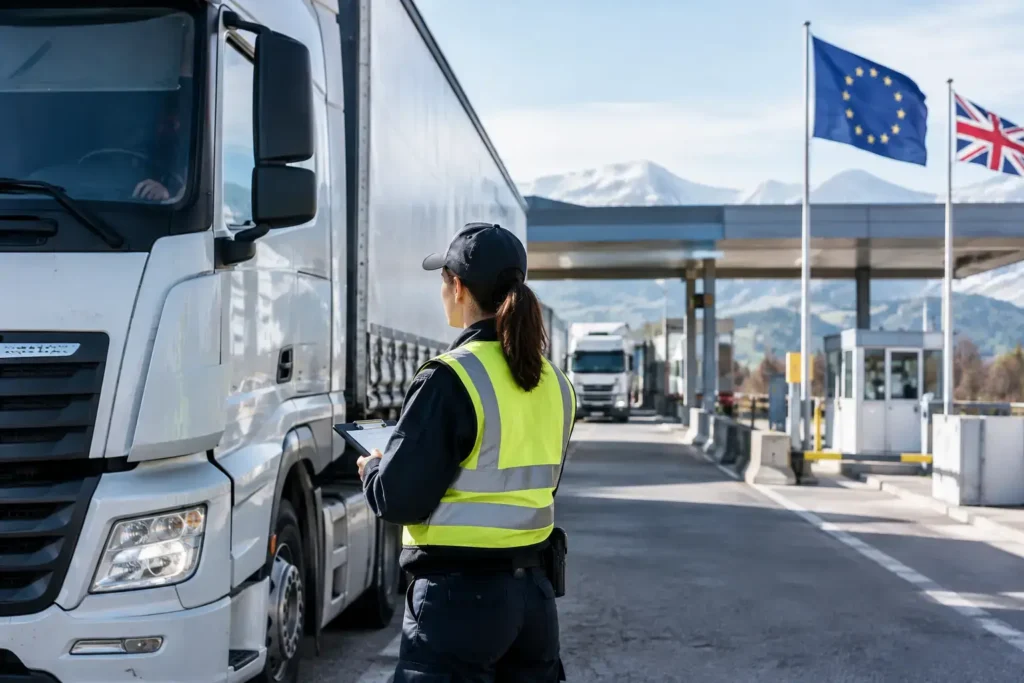
A lorry can be loaded, sealed and ready to leave, yet still lose a day at the border because the transit guarantee does not match the declaration. For supply chain managers moving goods through the UK, Switzerland, Turkey or other non-EU customs territories, this is not a paperwork detail. It affects vehicle utilisation, delivery slots, customer communication and cash exposure. This guide to customs transit guarantees explains what the guarantee secures, when it is needed and how to build it into a road-freight plan before the vehicle is dispatched.
What a customs transit guarantee actually protects
A customs transit guarantee secures the potential customs debt that may arise while goods move under a transit procedure. In practical terms, customs authorities need assurance that import duty, VAT and other charges can be recovered if the goods do not arrive correctly at the declared customs office of destination.
The guarantee applies while the movement is open. It is released only once the transit procedure has been properly discharged, meaning the goods, documents and electronic records align at destination. A vehicle reaching the consignee’s site is not, by itself, proof that the transit movement has been discharged.
For road freight, guarantees commonly arise under external Union transit, often known as T1, and under the Common Transit Convention. The latter is particularly relevant to movements involving the UK, the EU, Switzerland and Turkey. The electronic transit record, usually managed through the New Computerised Transit System, follows the goods between the office of departure, any offices of transit and the office of destination.
Do not confuse a customs transit guarantee with cargo insurance, CMR carrier liability or a duty-deferment arrangement. They cover different risks. Cargo insurance addresses loss or damage to goods. A transit guarantee concerns potential customs debt during a specific customs procedure.
When your road shipment needs transit cover
The need for a guarantee depends on the customs status of the goods, the route and the procedure selected. It is not determined simply by whether a lorry crosses a border.
A common example is a UK manufacturer sending non-Union goods from Manchester to Istanbul. The consignment may travel through France, Belgium, Germany, Austria and Bulgaria before entering Turkey. If it moves under Common Transit, the principal must provide a valid guarantee for the possible duty and tax debt while the procedure remains open. The transit declaration must also reflect the planned border offices, transport details and destination correctly.
Another frequent scenario is a shipment from an EU supplier to Switzerland. Switzerland is closely integrated with European trade flows but is outside the EU customs territory. Depending on the goods and agreed Incoterms, a transit movement may be needed to move the consignment to the import customs office or an authorised consignee.
Transit guarantees should be checked early where there are:
- goods entering or leaving the EU customs territory;
- movements through the UK, Switzerland or Turkey under Common Transit;
- goods travelling to an inland customs office rather than being cleared at the frontier;
- multiple consignments moving under one comprehensive guarantee; or
- time-critical deliveries where a rejected declaration would disrupt a booked unloading slot.
The operational point is simple: customs routing needs to be planned alongside collection time, border crossing and delivery appointment. Treating it as an administrative task after the vehicle has been allocated creates avoidable pressure.
Guide to customs transit guarantees: individual or comprehensive?
The right guarantee model depends on frequency, value and control requirements. An individual guarantee is linked to one transit movement. It can suit occasional shipments or one-off project cargo, where the administration is acceptable and the value is known in advance.
A comprehensive guarantee supports multiple transit operations up to an authorised reference amount. For regular importers, exporters and logistics operators, it can reduce repetition and make daily dispatch planning more predictable. It also requires stronger governance. The guarantee holder must monitor the available amount and ensure that open movements do not exceed it.
Choosing the cheapest option is not always the lowest-cost decision. An individual guarantee may appear straightforward, but repeated applications can slow a busy dispatch operation. A comprehensive guarantee may improve continuity, yet it creates risk if its reference amount is set too low or if discharged movements are not monitored promptly.
Before selecting the approach, assess the highest realistic exposure rather than an average shipment value. Include the customs value, tariff treatment, VAT exposure and the possibility of several lorries being in transit at the same time. A business shipping three high-value loads on a Friday afternoon may need considerably more cover than its normal weekday pattern suggests.
For established traders, customs authorities may authorise a reduction or waiver of guarantee requirements in specific circumstances. Eligibility depends on factors such as compliance history, financial standing and internal controls. It is an authorisation decision, not an assumption to build into a transport schedule.
Build the guarantee check into transport planning
A reliable process starts before the quotation is accepted. The transport team, customs broker and shipper need a shared view of the commercial and customs instructions. Small inconsistencies between these parties are a regular cause of transit delays.
Confirm the commodity description, commodity code where required, customs status, invoice value, Incoterms, exporter and importer details, and the intended customs office of destination. Then establish who will be the holder of the transit procedure, also called the principal. That party carries key responsibilities for presenting the goods intact and closing the movement within the prescribed time limit.
The haulier needs the correct movement reference number, supporting documents and clear instructions for each border or customs presentation. A driver cannot resolve an incorrect guarantee amount at a frontier while protecting a tightly planned delivery slot. For urgent transport, pre-validation before collection is particularly valuable because delivery in a few hours can become impossible after one customs rejection.
An operational checklist should also verify whether the vehicle will be sealed, whether any authorised consignor or consignee arrangements apply, and whether the route has changed since the declaration was prepared. A diversion caused by congestion, weather or a missed ferry can affect the planned office of transit and needs to be managed, not ignored.
Avoid the failures that keep transit movements open
Most guarantee problems are not caused by the concept of the guarantee itself. They arise when the movement is not discharged correctly or when the data does not match the physical shipment.
The most common failures include a wrong consignee address, an incorrect customs office code, missing documents at arrival, an incomplete goods description, a vehicle change that has not been communicated, or goods delivered before the customs presentation has been completed. Each can leave the transit movement open longer than expected.
Open movements matter because they continue to consume guarantee capacity. If several older movements remain unresolved, a comprehensive guarantee can become constrained just when a priority consignment needs to depart. This is why dispatch teams should not measure performance only by collection and delivery times. They should also monitor proof of arrival and discharge status.
Set a clear escalation point. If a movement has not discharged within the expected period, identify whether the issue sits with the consignee, customs representative, carrier or customs office. Prompt follow-up is usually far easier than investigating a discrepancy weeks later, when drivers, documents and handover records are harder to trace.
Use transport visibility to protect customs performance
Customs compliance and transport visibility should work together. Live location updates help a team anticipate arrival at a border or inland customs office, while proactive communication gives the consignee time to prepare staff and documents.
This is especially relevant on complex corridors. A ferry delay between the UK and continental Europe, queueing at a Turkish border crossing or a last-minute change to an unloading appointment can all put pressure on the transit time limit. The correct response depends on the procedure and route, but the common requirement is rapid coordination between the transport operator and customs contacts.
MAP Transport has coordinated international road freight since 1985, including customs-sensitive flows where timing, vehicle selection and documentation must align. For standard loads, express consignments and exceptional shipments, the transport plan should identify the customs handovers before collection, not after a border issue occurs.
Keep the guarantee proportionate to the shipment risk
A transit guarantee should support movement, not become the reason a load stops. The most effective approach is to define responsibility early, calculate realistic exposure, validate the declaration before dispatch and follow the movement through to discharge. That discipline protects both compliance and delivery performance when a route crosses several customs jurisdictions.
For recurring trade lanes, review guarantee use alongside missed delivery slots, unresolved movements and border waiting time. The pattern will show whether the issue is the guarantee level, customs data, consignee readiness or route design. A tailored transport plan can then remove the recurring point of failure rather than merely reacting to the next delay.
Need support on your transport flows? Contact our team for a tailored solution.
Have a question or need a quote? Contact us at (+34) 943 62 95 77 (ask for Raquel) or by email at lo*******@**********rt.com