
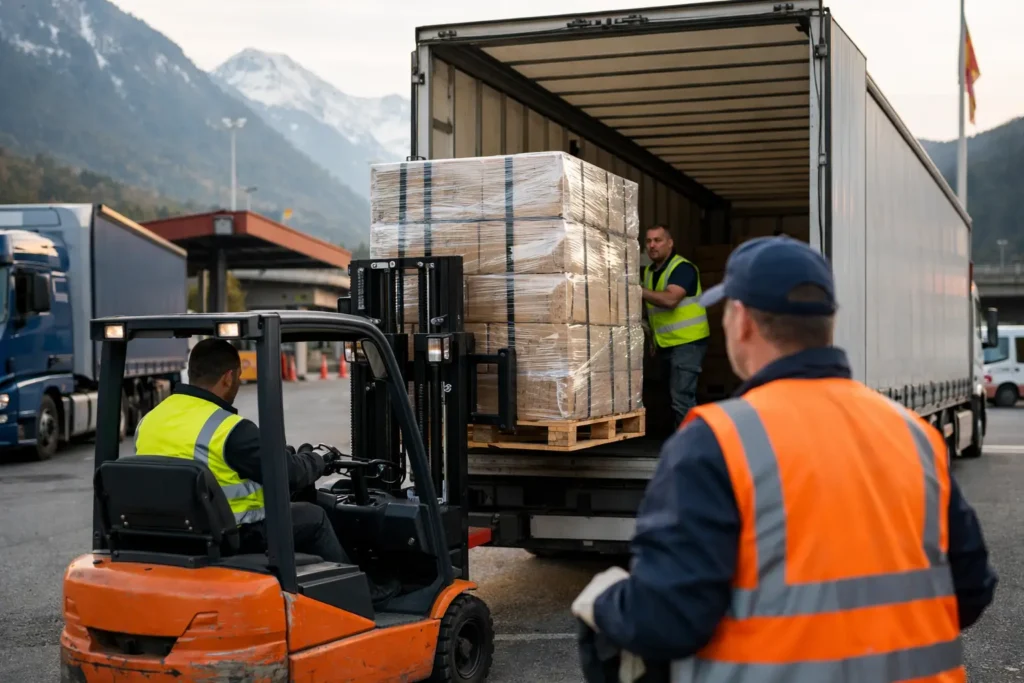
A production line stops at 14:10 because one pallet of components has not arrived. Purchasing is chasing updates, the customer deadline is still fixed, and every lost hour starts to show up in cost. That is the reality behind urgent road freight. If you need to know how to ship urgent pallets, the answer is rarely just “book express transport”. Speed matters, but so do the details that decide whether the pallet moves immediately or sits waiting for paperwork, vehicle allocation or border clearance. For supply chain teams moving goods across Europe, the safest urgent shipment is the one planned fast and correctly.
How to ship urgent pallets when time is measured in hours
The first decision is not price. It is whether the shipment genuinely needs a dedicated urgent solution or whether a standard network can still meet the delivery window. Many delays happen because a pallet is labelled urgent too late, after internal handling time has already been lost.
If the deadline is within the same day or under 24 hours, dedicated road transport is usually the practical option. That means assigning the right vehicle as soon as the shipment is released, rather than waiting for consolidation. For one to three pallets, a van or dedicated lorry can often be more reliable than trying to place the load into a standard groupage flow.
This is where complete shipment data makes a measurable difference. To move quickly, the carrier needs the exact collection address, delivery address, number of pallets, weight, dimensions, goods description, readiness time and any site restrictions. Missing one of these can cost more time than most shippers expect. According to the International Road Transport Union, road freight carries the majority of inland freight in Europe, which makes planning efficiency and border readiness critical for time-sensitive movements. In urgent transport, incomplete booking information is one of the most common avoidable risks.
A simple operational insight applies here: urgency does not remove process. It compresses it. The faster the booking, the less room there is to correct bad data later.
The information you need before booking urgent pallets
When supply chain managers ask how to ship urgent pallets successfully, the real question is often how to prevent the first avoidable failure. Urgent freight tolerates very little uncertainty, so the booking must be operationally clean from the start.
You should be ready to confirm four things immediately: whether the goods are stackable, whether they require a tail lift or forklift, whether there are customs formalities, and whether delivery is booked in with the consignee. If the route involves the UK, Switzerland or Turkey, customs readiness can be as important as vehicle availability.
For example, a pallet collected in northern Spain at 17:00 for delivery near Birmingham may still miss its target if export paperwork is incomplete or the importer reference is missing. The vehicle can leave on time and still lose hours at the border. On UK flows, using current guidance from the UK Government customs pages is essential. On EU-side shipments, the European Commission trade and customs information provides the current framework shippers need to check.
This is why many urgent moves fail before the wheels turn. The transport itself is not the only deadline. Documentation has its own deadline too.
Choosing the right vehicle for urgent pallet transport
Not every urgent pallet should move on the same type of vehicle. Matching the load to the vehicle is one of the fastest ways to avoid both delay and unnecessary spend.
A small urgent consignment may be best suited to a dedicated van if access is tight, unloading is quick and transit speed matters most. Heavier or higher pallet counts may require a dedicated lorry to protect load stability, simplify loading, or comply with weight distribution needs. If the goods are non-standard, oversized or unusually heavy, forcing them into a standard urgent setup can create handling delays at collection or delivery.
This is one of the advantages of working with a provider that offers different service levels such as urgent road transport solutions, standard freight planning and specialist handling for exceptional loads. The vehicle should fit the shipment, not the other way round.
There is also a trade-off to manage. Dedicated transport costs more than a shared option, but when a delayed pallet threatens line stoppage, missed export cut-off or customer penalties, the cheaper booking can become the expensive decision. For procurement teams, that is the real cost comparison.
Urgent pallet shipments on complex cross-border routes
Cross-border urgency adds another layer of risk because transit time is no longer driven only by distance. Border procedures, driving regulations, local restrictions and consignee readiness all affect the final result.
A concrete example: an industrial supplier needs two pallets of replacement parts moved from Belgium to a plant in western Turkey after a quality issue on site. On paper, the job is simply urgent road freight. In practice, it requires export documentation, customs coordination, precise handover planning and realistic transit timing across multiple jurisdictions. If any document is missing or the goods description is too vague, the delay can wipe out the value of the urgent service.
For these routes, proactive communication matters as much as movement speed. The shipper needs updates at each key stage – collection, border crossing, customs release and final delivery window. This is especially true when moving into non-EU markets or across more remote corridors where the margin for recovery is smaller.
For companies shipping regularly into sensitive routes, it helps to work with a team that already manages international road freight across Europe and beyond. Familiarity with customs patterns and route constraints reduces decision time when the urgent request lands.
How to reduce delay risk after the pallet has been collected
Once an urgent pallet is on the road, the job is not finished. The next risk is loss of visibility. A shipment can still fail if the consignee is not ready, if booking references are wrong, or if no one reacts quickly to a border or site-access issue.
The best urgent flows are actively monitored. That means someone is checking progress, confirming milestones and raising exceptions early. If there is a hold-up at collection, an issue with customs, or a late change to the delivery slot, the response has to happen in real time.
This matters because recovery windows are short. If a delivery appointment is missed on a standard movement, there may be another slot the next day. On urgent freight, the business impact is usually immediate. A missed slot can mean idle labour, halted production or a failed customer commitment.
One practical recommendation is to agree escalation points at the booking stage. Who approves route changes? Who can confirm alternative unloading times? Who is available if customs requests supporting documents outside office hours? These decisions should not wait until the shipment is already delayed.
Shippers looking to tighten this process can use the contact page to submit the exact pallet data early and speed up response time when a critical move appears.
A faster booking process starts before the emergency
The companies that handle urgent pallets best are rarely the ones making heroic decisions at the last minute. They are the ones that prepare repeatable transport information before the emergency arrives.
If you move time-critical goods regularly, build a simple internal checklist for urgent pallet bookings. Keep standard shipment dimensions, customs references, delivery contacts and site requirements easy to access. Confirm who can authorise premium transport out of hours. Make sure the transport partner knows which lanes are commercially critical and which customers cannot accept missed windows.
This does not remove the pressure, but it shortens response time and improves accuracy. For manufacturers, distributors and industrial suppliers, that can be the difference between same-day collection and a long chain of preventable calls.
Knowing how to ship urgent pallets is really about knowing which details cannot be left to chance. Fast road freight works best when urgency is supported by clean data, suitable equipment, route awareness and active follow-up. That is where experienced freight coordination earns its value, especially on cross-border moves where delays can escalate quickly.
If your team is balancing delivery-time pressure with customs, access constraints or sensitive customer commitments, specialist support can remove both uncertainty and wasted time. Need support on your transport flows? Contact our team for a tailored solution.
Have a question or need a quote? Contact us at (+34) 943 62 95 77 (ask for Raquel) or by email at lo*******@**********rt.com
