
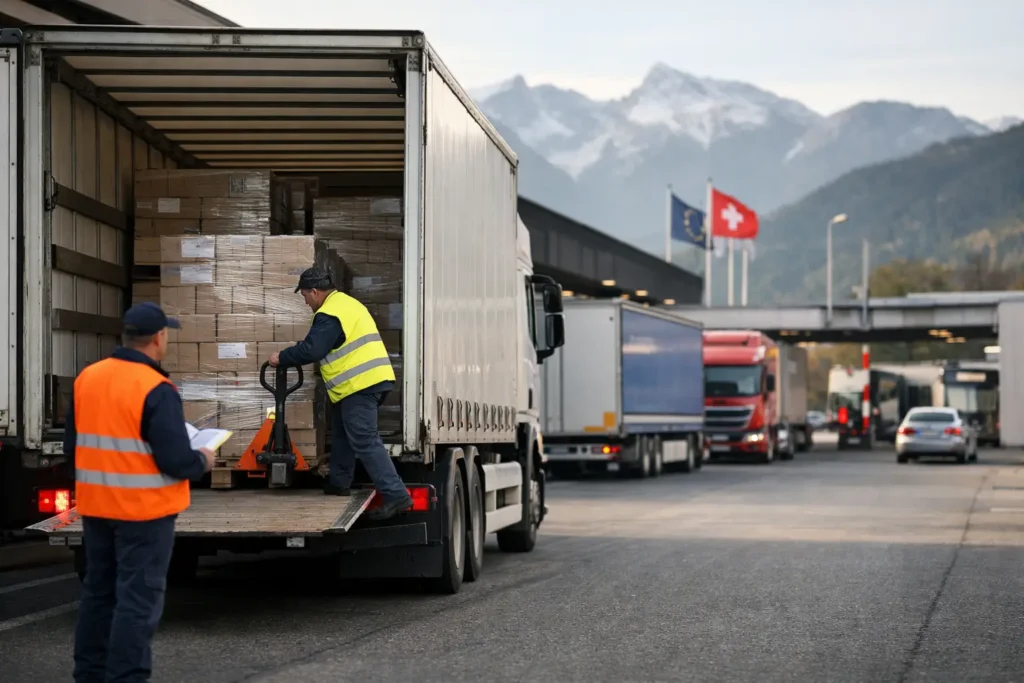
When a production line is waiting for a replacement part, a customer has fixed delivery slots, or a border crossing threatens to consume the available lead time, standard transport planning is no longer enough. This guide to time critical freight planning is for logistics teams that need delivery certainty, not just a fast collection promise. The difference is preparation: confirming the real deadline, selecting the right vehicle, checking customs exposure and maintaining control from loading through to proof of delivery. For urgent movements across Europe, the UK, Switzerland, Turkey and the Caucasus, a missed detail at booking can become a costly delay on the road.
Start the guide to time critical freight planning with the real deadline
The first question is not, “How quickly can the vehicle arrive?” It is, “What does late delivery actually mean for this shipment?” A delivery required before a 06:00 production shift, for example, needs a different plan from a shipment that can arrive at any point during the day.
Define the delivery commitment precisely. Confirm the latest acceptable arrival time, site opening hours, unloading restrictions, named contact, security procedures and whether an earlier delivery can be accepted. This prevents a common failure: an express vehicle reaches the destination on time but cannot unload because the receiving team has not been informed.
Work backwards from the delivery slot. Include loading readiness, collection access, driving distance, mandatory rests where applicable, border formalities, ferry or tunnel availability, fuel stops and a realistic contingency. A 900-kilometre direct road movement may be technically possible within a day using a dedicated vehicle, but the plan changes if collection is delayed by two hours or the consignee requires pre-booked access.
The operational insight is simple: urgency should be measured against the latest workable delivery time, not against the collection time. This is how transport teams avoid paying for an ultra-fast service when a controlled next-day delivery would meet the business need, or choosing a cheaper option that has no recovery margin.
Match the vehicle and service to the actual risk
Time-critical freight is not one service category. A small, high-value component may need a dedicated van and two-driver operation. Several pallets of industrial materials may be better suited to a dedicated lorry. A heavier or unusually shaped item may require specialist equipment, even when the delivery window is tight.
Vehicle selection affects more than transit speed. It determines loading flexibility, border handling, security, access to urban or restricted sites and the ability to recover from disruption. Sending a partially loaded articulated vehicle for a shipment that could travel in a dedicated van may create unnecessary handling and routing risk. Equally, using the smallest vehicle without confirming dimensions can cause a failed collection and lose the critical hours you were trying to protect.
Before requesting a quote, provide exact weight, dimensions, number of packages, loading method and any special handling conditions. State whether the goods are stackable, whether they require straps or temperature control, and whether they are subject to dangerous goods or waste regulations. These details allow the transport partner to plan a service that fits the shipment rather than forcing the shipment into a standard model.
For the most urgent cases, a dedicated Xpress or UltraExpress movement gives the clearest control. The vehicle runs directly from collection to delivery, with no terminal handling or additional collection points. MAP Transport plans urgent movements for delivery in a few hours or in under 24 hours across European routes, depending on distance, access and border conditions.
Protect urgent freight from customs delays
A direct vehicle does not remove a customs problem. On UK, Swiss, Turkish and Caucasus routes, documentation can decide whether the freight moves or waits. A missing commodity code, inconsistent invoice value or incomplete transit reference can stop an otherwise well-planned urgent consignment.
Customs checks should begin at quote stage, not after the vehicle has been dispatched. Establish who is responsible for export and import declarations, whether the importer has the required registrations, which documents must travel with the goods and whether the goods are eligible for any specific procedure. For UK movements, confirm the commercial invoice, packing list, EORI details and customs declaration process before collection. For Switzerland, ensure the importer and customs representation arrangements are clear. Turkey and onward Caucasus routes require particular attention to documentation consistency and border timing.
A concrete example: a manufacturer in northern Spain needs an emergency machine component delivered to a customer in Birmingham before the next shift. The part can reach the Channel crossing quickly in a dedicated van, but the plan fails if the importer has not approved the customs entry or the commercial invoice does not match the goods description. The correct response is not simply to send the vehicle earlier. It is to verify the export and import file, confirm the crossing and customs process, then keep the consignee ready to receive the delivery.
Customs planning also needs contingency. If the nominated border office or crossing faces disruption, the transport manager should know the alternative route, the cost impact and whether the revised option still protects the delivery commitment. This is especially relevant for shipments where one hour at the border can remove the entire recovery window.
Build a control plan for every handover
Time-critical freight loses value when information is delayed. A supply chain manager should be able to see who owns each decision from the moment goods are ready until the delivery is signed.
Set a communication plan before collection. The shipper should know when the vehicle is assigned and arriving. The consignee should know the expected delivery window and any unloading requirements. The transport coordinator should receive updates at defined milestones: loaded, border reached where relevant, exception identified and delivered.
For high-risk freight, name an escalation contact on both sides. This matters when a production site changes shift patterns, a loading bay becomes unavailable or a customs query requires an immediate document correction. A generic inbox is rarely enough for freight that has a delivery deadline measured in hours.
There is a cost trade-off here. Frequent status updates and dedicated coordination are more resource-intensive than a standard groupage movement. However, when late delivery could trigger production downtime, premium freight charges are often lower than the operational cost of waiting for a critical component. The right decision depends on the value of the goods, the consequence of delay and the availability of a workable alternative.
Plan recovery options before disruption happens
No urgent transport plan is immune to traffic restrictions, weather, port congestion or delayed loading. Good planning does not promise that nothing will happen. It prepares a decision path for when it does.
At booking, identify the one or two risks most likely to affect the lane. For Scandinavia, weather and ferry schedules may shape the route. For the UK, crossing capacity and customs readiness can be decisive. For Turkey and the Caucasus, border queues and documentation requirements need more contingency than a straightforward intra-EU movement.
The recovery plan may involve a different crossing, a driver change, an alternative delivery point or a revised service level. These options must be agreed early enough to use them. If the consignee can accept delivery at a nearby secure site after normal hours, that flexibility may save the shipment. If it cannot, the transport team needs to know before the vehicle is already committed to the route.
Keep the final decision practical: use the fastest solution that protects the required outcome, rather than automatically choosing the most expensive service. Reliable time-critical freight planning is a balance of speed, documentation, vehicle suitability and active communication. With 40 years of experience coordinating cross-border road freight, MAP Transport can help turn that balance into a plan that holds up under pressure.
Have a question or need a quote? Contact us at (+34) 943 62 95 77 (ask for Raquel) or by email at lo*******@**********rt.com
Need support on your transport flows? Contact our team for a tailored solution.