
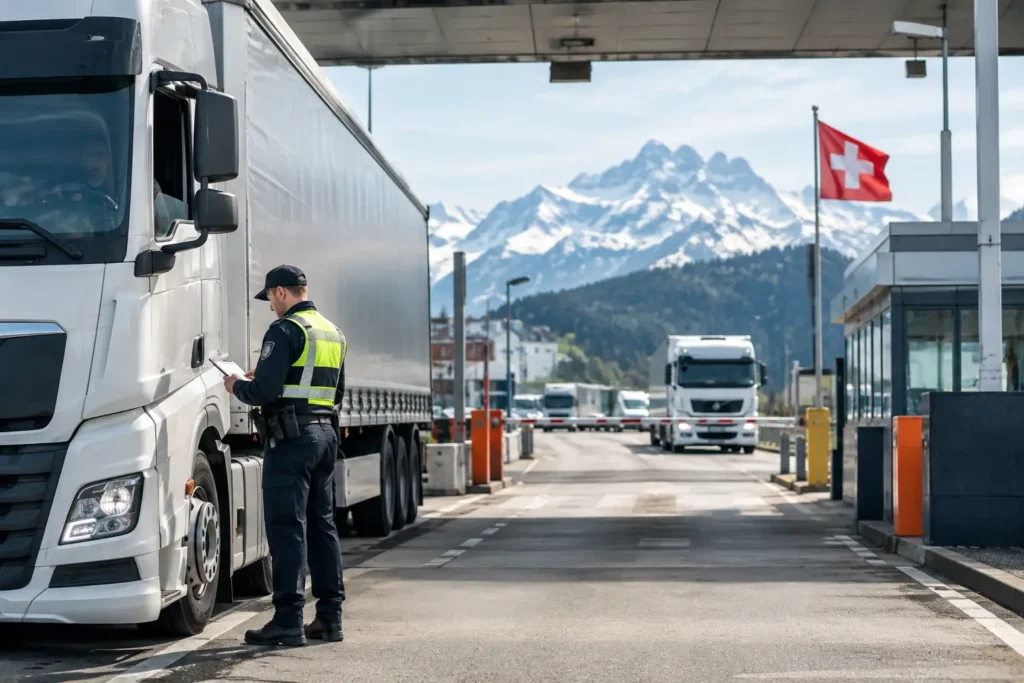
A lorry can be on time at the border and still miss its delivery slot by a day if the customs procedure was chosen incorrectly. For European manufacturers and distributors moving goods through the UK, Switzerland, Turkey or onward to the Caucasus, the decision around bonded transit versus clearance affects more than paperwork. It determines where duties become payable, who can release the goods, how long the vehicle waits and whether a time-critical consignment can keep moving. The right option depends on the final destination, the importer of record and the readiness of the customs declaration before collection.
Bonded transit versus clearance: the operational difference
Customs clearance releases non-Union goods into the market of the country where the declaration is made. Import duty, import VAT and any applicable controls are dealt with at that point. Once released, the goods can normally circulate under the relevant local rules without remaining under customs supervision.
Bonded transit, usually arranged under a transit procedure such as T1 or T2 where applicable, keeps goods under customs control while they travel from one customs point to another. Duties and taxes are suspended until the consignment reaches its intended customs office or approved destination. The procedure is backed by a financial guarantee, which is why accurate documentation and authorised handling matter.
The practical distinction is simple: clearance completes the import at the border or entry point; bonded transit postpones the import formalities until the goods reach a different customs location. Neither is automatically better. The correct choice is the one that matches the commercial flow and prevents a customs stop at the wrong point in the journey.
When clearance at entry is the better route
Entry clearance is often the most efficient option when the consignee, importer and final delivery point are all in the same country, and the documents are complete before the vehicle departs. A shipment of machine components travelling from northern Spain to a customer in Switzerland, for example, may clear at the Swiss border and proceed directly to the consignee’s site.
This route can reduce handling because there is no need to move the goods under bond to an inland customs office. It also gives the receiver immediate certainty that the goods have been released for use, which is valuable when components are required for production on arrival.
However, border clearance only works well when the importer’s details, commodity codes, origin information, commercial invoice and supporting licences are ready. If the consignee cannot be reached, the importer has not authorised the declaration, or values need correction, the lorry waits. For urgent road freight, that can quickly turn a delivery planned in hours into a missed production window.
A useful operational rule is to choose entry clearance when the following are aligned before collection: the importer is confirmed, customs data is validated and the delivery address is the final destination. If any of these elements remains uncertain, transit may provide more control.
When bonded transit protects delivery performance
Bonded transit is particularly useful when goods enter one country but must clear elsewhere. Consider a load arriving in the UK through a port in southern England, then travelling to a consignee with customs facilities in the Midlands or Scotland. Clearing immediately at the port may create unnecessary pressure if the importer’s broker, approval process or receiving site is based inland. A transit movement allows the vehicle to continue to the agreed customs office or authorised consignee location before the import declaration is completed.
The same logic applies to complex European road routes. Goods moving from the EU through Switzerland to a destination beyond the border, or consignments entering Turkey for delivery to an inland industrial zone, may need a procedure that reflects where the commercial import will actually take place. The transport plan must account for the opening and discharge of transit, border operating hours and the receiving party’s ability to close the movement promptly.
The key benefit is control over the clearance location. The trade-off is added procedural discipline. A transit movement cannot simply be treated as a transport document. It must be discharged correctly at destination. If that closure is delayed or missed, the guarantee can remain exposed and the carrier, agent and shipper may need to investigate the movement.
For this reason, bonded transit is often the safer choice for multi-stop, cross-border or uncertain delivery flows, but only where each party knows who is responsible for customs closure.
The cost of choosing the wrong customs procedure
The visible cost of a customs delay is usually vehicle waiting time. The less visible costs are often more damaging: a production line without a critical part, a driver unable to meet a subsequent collection, missed unloading appointments and time spent resolving a declaration while the load remains immobilised.
For a manufacturer shipping a replacement press component from France to a UK plant, clearance at the port may seem quicker. But if the UK importer has not approved the declaration data, the consignment can be held at the point with the least flexibility. Transit to an inland customs location, where the importer’s appointed agent can act immediately, may protect the delivery schedule despite adding an administrative step.
There is also a cash-flow consideration. Clearance triggers the duty and VAT process at the point of import. Under bonded transit, payment and accounting are deferred until the goods reach the nominated clearance location. This does not remove the liability, but it can align the customs event with the importer’s internal process and reduce the risk of a declaration being made under incomplete commercial instructions.
MAP Transport coordinates road freight in 45 countries and has supported complex cross-border movements since 1985. For customers, the value is not simply arranging a lorry. It is identifying early whether a shipment needs direct clearance, transit documents, a specialist customs partner or an alternative delivery plan before the vehicle is loaded.
Planning bonded transit versus clearance before collection
The best customs decisions are made before the loading date, not while the vehicle is queued at the border. Customs information should sit alongside the usual freight brief: collection and delivery addresses, weight, dimensions, loading requirements and requested delivery time.
Before confirming transport, establish the following operational points:
- the importer of record and the party authorised to instruct customs clearance;
- the correct commodity codes, goods description, value, origin and supporting commercial documents;
- whether the final destination can receive goods under transit or needs an inland customs office;
- who will open and discharge the transit procedure, including out-of-hours contacts;
- whether the route crosses borders with different entry requirements, such as the UK, Switzerland or Turkey.
This preparation matters even more for express freight. A dedicated van can cover a substantial European route in under 24 hours, but speed on the road cannot compensate for missing import instructions. For an urgent shipment, the customs file should be checked before the vehicle is dispatched, with named contacts available at both origin and destination.
A further operational insight is to separate the physical destination from the customs destination. They may be the same, but they do not have to be. A warehouse, factory or customer site can only be the right customs destination if it has the necessary authorisation or a workable arrangement with the appointed customs representative. Treating those locations as automatically interchangeable is a common source of preventable delay.
A decision framework for supply chain managers
Choose direct clearance when the final country of import is known, the importer is ready, the documents have been checked and delivery can proceed directly after release. This approach suits straightforward shipments to a single consignee with stable customs processes.
Choose bonded transit when entry and final clearance take place in different locations, when goods need to move inland before import formalities are completed, or when the receiving site has a defined process for handling transit goods. It is also useful when a route includes multiple border stages and customs responsibility needs to be controlled at a specific point.
For recurring flows, document the chosen model in the transport instruction. Include the customs procedure, authorised broker, discharge location, reference numbers and escalation contacts. This turns a decision made under pressure into a repeatable operating process. With more than 200 customers supported each year, MAP Transport sees that consistency in these instructions is often what separates reliable cross-border transport from a costly exception.
The most effective customs plan is the one that lets the freight keep moving while giving the importer proper control of the declaration. Confirm the route, customs responsibility and delivery deadline together, especially where an urgent movement crosses the UK, Swiss or Turkish border.
Need support on your transport flows? Contact our team for a tailored solution.
Have a question or need a quote? Contact us at (+34) 943 62 95 77 (ask for Raquel) or by email at lo*******@**********rt.com