
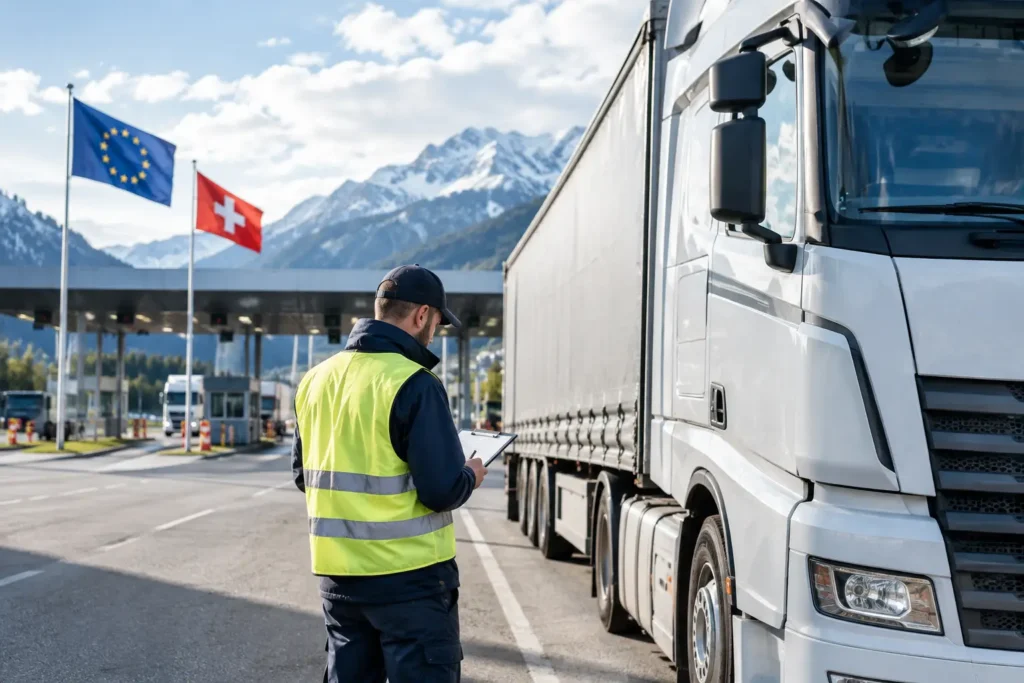
A late delivery to Turkey is disruptive. A damaged production component held at the UK border can be far more expensive, particularly when the consignee stops a line or rejects the goods. This guide freight insurance Europe explains how to protect road shipments where carrier liability, cargo value, customs formalities and delivery urgency do not always align. For supply chain managers, the question is not simply whether a load is insured. It is whether the policy will respond to the actual loss scenario, on the route, with the documents and timeframes required to keep the commercial impact under control.
Freight insurance is not the same as carrier liability
International road transport is commonly performed under the CMR Convention. CMR establishes a carrier’s liability framework for loss, damage and delay where the convention applies. It does not automatically mean that the full invoice value of your cargo is protected.
A key limitation is the compensation calculation for damaged or missing goods. Under CMR, liability is generally limited to 8.33 Special Drawing Rights per kilogram of gross weight. For high-value, low-weight products – electronics, specialist machine parts, medical equipment or precision tools – that amount can sit far below the commercial value of the consignment.
Consider a 180 kg urgent shipment of electronic control units from Birmingham to Zurich, invoiced at £85,000. If the vehicle is involved in an incident and the goods are irrecoverable, a CMR-based claim may only cover a fraction of that value. The financial exposure is not theoretical: replacement stock, expedited production and customer penalties can all follow.
Cargo insurance is designed to cover the goods themselves, subject to the policy wording, declared value, exclusions and conditions. It can be arranged as an annual open policy for regular flows or as cover for an individual movement. Carrier liability and cargo insurance can work alongside one another, but they respond to different risks.
Guide freight insurance Europe: define the real exposure
The right level of cover depends on the load and route, not simply on the freight rate. Start by mapping the total value at risk for each shipment. This should include the goods’ invoice value, freight charges where relevant, and any additional insured expenses permitted by the policy.
Then examine what a delayed, damaged or lost shipment would mean operationally. A pallet of standard fasteners may be easy to replace. A single oversized component for a shut-down factory, moved on a specialist vehicle, may trigger significant costs if it does not arrive on the agreed date.
For regular movements, segment freight into practical risk groups. High-value but compact loads, temperature-sensitive goods, exceptional shipments and consignments crossing customs borders need closer scrutiny than standard, easily replaceable cargo. The following factors usually determine the cover required:
- the cargo value per kilogram and per consignment
- the route, including border crossings and planned transhipments
- the consequences of delay at the consignee’s site
- packaging quality and loading responsibility
- whether goods are new, used, repaired or sold under a specific trade term
Operational insight: insure the value you would need to spend to restore the customer commitment, not merely the price shown on an internal transfer document. Under-insurance is often discovered only after a claim, when the replacement value is higher than the declared amount.
Check what the policy actually covers
Policy labels can be misleading. “All risks” cover is broad, but it is not limitless. The wording normally contains exclusions, notification rules and duties for the insured party. Before dispatch, confirm whether the policy covers theft, accidental damage, water damage, loading and unloading, and losses during temporary storage or customs intervention.
Pay particular attention to exclusions involving inadequate packaging, inherent vice, wilful misconduct, war, strikes or confiscation by authorities. A customs seizure caused by incorrect declarations is unlikely to be treated in the same way as physical cargo damage. Where a route includes Turkey, Switzerland or the UK, documentation errors can create delay, storage and re-delivery costs even where the goods themselves remain intact.
Trade terms also need a separate discussion. Incoterms allocate responsibilities between buyer and seller, including who arranges transport or insurance at certain points. They do not replace an insurance policy, and they do not decide every aspect of a carrier’s liability. Procurement, sales and logistics teams should agree who insures each movement before collection, especially for FCA, CPT, CIP, DAP and DDP sales.
For urgent freight, check that the policy does not create an impractical approval process. If an essential spare part must leave Spain for a customer in northern Italy within hours, the transport decision cannot wait for uncertainty over insured value, routing or security conditions. Pre-agreed cover and a clear shipment declaration process reduce that risk.
Customs routes create a second layer of risk
Within the EU customs union, road freight may move without import or export declarations at internal borders, although product-specific controls can still apply. Once a shipment crosses into the UK, Switzerland, Turkey or the Caucasus, the transport plan must include customs procedures, document quality and realistic border timing.
Insurance will not correct a missing commercial invoice, an inconsistent commodity description or an incorrect origin statement. It may also exclude financial loss caused solely by delay. That is why cargo risk management must start before the lorry is loaded.
Take an industrial supplier sending a replacement hydraulic assembly from France to a customer in the UK. The shipment is time-critical, but its invoice lists only “parts” and the packing list does not match the declared weight. Border clearance may stop while the paperwork is corrected. If the customer faces downtime, the carrier cannot simply drive around the problem, and standard cargo cover may not pay the customer’s production loss.
A practical pre-departure check should confirm the commodity description, values, commodity codes where needed, exporter and importer details, origin evidence, transit arrangements and named customs representatives. For specialist or oversized freight, check permits, route restrictions and loading plans at the same stage. These controls protect insurability as well as delivery performance.
Match security measures to the value and urgency of the load
Insurance providers may set conditions for high-value freight, such as secure parking, tracking, two-driver operation or restrictions on unattended vehicles. Those conditions should be built into the transport plan, not treated as paperwork after collection.
This is especially relevant for express movements. A direct van service can reduce handling points and shorten exposure time, but it may not suit every load. A full lorry can be more appropriate where volume, weight distribution or specialist securing demands it. The best option depends on the cargo profile and delivery deadline.
For example, a critical aerospace component moving from Germany to Turkey may require a dedicated vehicle, continuous monitoring, planned secure stops and proactive customs coordination. A lower-value replenishment load on the same route may be safely consolidated, provided the delivery window allows it. The point is not to pay for the highest specification every time. It is to select controls that match the consequence of failure.
Ask your transport partner how collection, securing, route planning, driver handovers and delivery evidence are managed. Clear handover records and photographs of any visible damage can be decisive if a claim is required. The same applies to immediate written notice when loss or damage is found at delivery. Waiting until stock has been moved or unpacked can make the evidence harder to establish.
Make claims readiness part of transport planning
A good insurance arrangement is tested when something goes wrong. Keep a shipment file containing the transport order, commercial invoice, packing list, proof of value, photographs, CMR consignment note, delivery receipt and correspondence about any exception. If the cargo is damaged, record reservations on delivery where possible and notify the carrier and insurer without delay.
Do not assume a clean delivery signature closes every issue, but do not rely on a later complaint either. Hidden damage may have different notification requirements from visible damage. Check the policy and freight contract, then involve the transport provider quickly so evidence can be preserved.
For businesses with recurring European flows, review claims and near misses quarterly. Look for repeated causes: poor packaging, ambiguous delivery instructions, vulnerable parking locations or customs data failures. This can improve insurance terms over time, but more importantly it reduces disruption before a claim is ever needed.
Freight insurance should support a dependable transport operation, not become a last-minute box to tick after a quote is accepted. Since 1985, MAP Transport has coordinated tailored road freight across complex European and customs-sensitive routes, helping customers select the service and controls that fit each load. A clear brief – origin, destination, weight, dimensions, cargo value, deadline and customs status – gives your transport team the basis to plan with fewer assumptions.
Have a question or need a quote? Contact us at (+34) 943 62 95 77 (ask for Raquel) or by email at lo*******@**********rt.com
Need support on your transport flows? Contact our team for a tailored solution.