
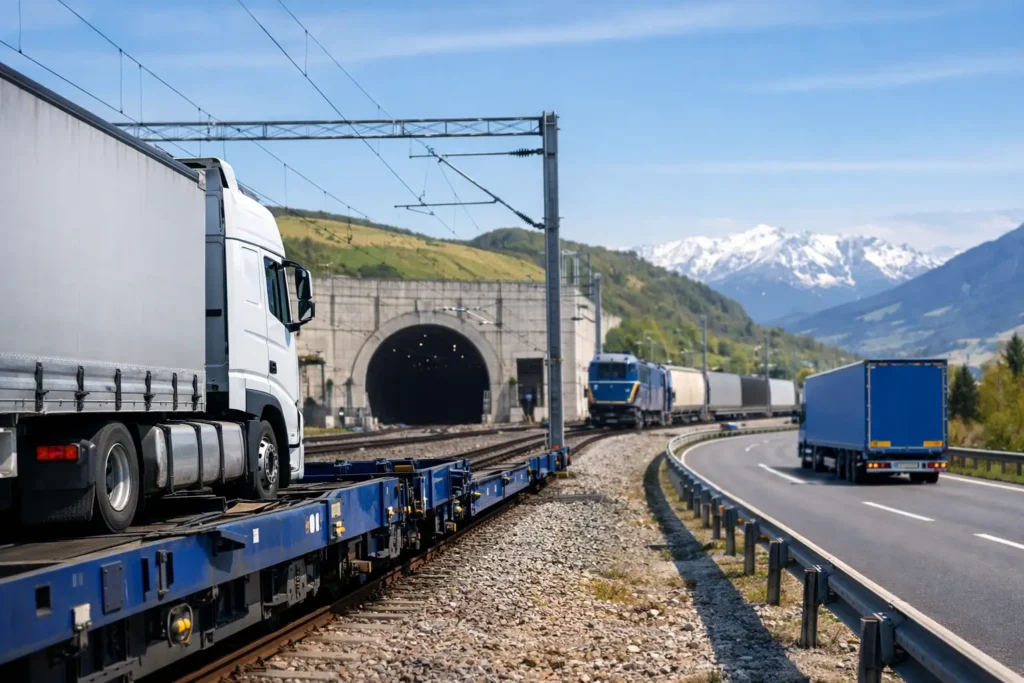
A missed collection in Birmingham can turn into a production delay in Belgium by the next morning. That is why UK to Europe road freight is rarely just about moving pallets from one postcode to another. For logistics managers and procurement teams, it is about keeping supply chains stable, controlling landed cost and knowing exactly who is responsible when timing matters.
Road transport remains the preferred option for many UK exporters and European importers because it gives more flexibility than sea freight and more practical capacity than air for routine industrial shipments. It suits full loads, part loads, urgent consignments and specialist movements where timing, handling and routing need closer control. The value is not just in the vehicle. It is in the planning behind it.
What makes UK to Europe road freight complex
Since the UK left the EU customs union, cross-border road movements involve more than booking a lorry and issuing a delivery note. Customs formalities, commodity codes, Incoterms, proof of origin, transit procedures and border checks can all affect transit time. Even when the route itself is straightforward, paperwork errors create avoidable delays.
That is why experienced shippers now look beyond headline rate. A lower transport price means little if the wrong vehicle is sent, customs information is incomplete or there is no proactive follow-up once the goods are in transit. In practical terms, dependable UK to Europe road freight depends on three things working together – the right service level, the right documents and the right operational contact.
For manufacturers and industrial suppliers, there is often an added layer. Goods may be heavy, high value, awkwardly shaped or needed for a fixed delivery slot. A standard groupage model does not always fit. In those cases, transport planning has to reflect the shipment, not the other way round.
Choosing the right service for the load
The most efficient road freight plan starts with a simple question: what does this shipment actually need? Some consignments can move on a standard lead time with cost as the main driver. Others need direct delivery, dedicated vehicles or specialist equipment. Treating all freight as if it has the same priority usually creates either unnecessary cost or unnecessary risk.
Standard freight for regular flows
For repeat shipments between the UK and mainland Europe, a classic road freight service is often the best fit. It works well for palletised freight, industrial materials, packaged goods and scheduled replenishment. The advantage is predictable planning and sensible cost control, especially when volume is stable and delivery windows are realistic.
This is where a specialist partner should add value through route planning, vehicle selection and shipment monitoring. If a consignment needs a tautliner, box vehicle or dedicated van, that choice should be made according to the cargo profile and delivery requirement. A one-size-fits-all approach may fill a vehicle, but it does not always protect the shipment or the timetable.
Express freight when time is the real cost
Sometimes the cheapest option is the one that arrives fastest. If a production line is waiting for parts, or a customer shutdown carries contractual penalties, urgent transport can protect far more value than it costs. Dedicated express road freight from the UK into Europe is particularly useful for automotive supply, engineering spares, events logistics and high-priority replenishment.
The key difference is not simply speed. It is operational focus. Direct routing, immediate dispatch and active progress updates matter because the shipment is usually tied to a wider business consequence. For these loads, response time at quotation stage is also part of the service. If a haulier takes half a day to confirm availability, the transport window may already be lost.
Exceptional loads need specialist control
Oversized, heavy or non-standard shipments need more than additional capacity. They often require route surveys, permits, loading plans and handling methods matched to the cargo. The UK to Europe corridor includes multiple jurisdictions, so compliance and execution must be coordinated properly from the start.
This is where specialist management reduces exposure. If the dimensions, weight distribution or handling points are not checked early, problems show up later at the border, at collection or on final delivery. By then, the cost of correction is much higher.
Border planning is now part of transport planning
For many shippers, the transport challenge is no longer the distance from Manchester to Munich or from Leeds to Lille. It is the handover between commercial documents, customs data and physical movement. Border planning has become part of daily freight planning.
Accurate shipment information makes the biggest difference. Weight, dimensions, packaging type, cargo description, value and origin all need to be clear before dispatch. If the load includes controlled materials or sector-specific compliance requirements, these should be flagged at quotation stage, not after the vehicle is booked.
A dependable operator will ask for this information early because it protects transit performance. That may feel more detailed than a simple rate request, but it is usually the reason a shipment moves cleanly. Fast execution depends on clean preparation.
For businesses shipping frequently, there is also a strong case for standardising internal data capture. If your dispatch team, purchasing team and freight partner all work from the same shipment fields, exceptions are easier to spot before they turn into delays.
Why communication matters as much as capacity
Most cross-border problems are manageable when they are identified early. A delayed loading slot, a customs query or a traffic disruption does not always become a service failure. It becomes a failure when nobody takes ownership.
That is why communication is not a soft extra in UK to Europe road freight. It is a control tool. Logistics teams need to know when the vehicle is booked, when the goods are collected, whether the crossing is on schedule and whether delivery remains on track. They also need one operational contact who can give a clear answer quickly.
For companies shipping into several European markets, multilingual coordination becomes especially valuable. Misunderstandings around delivery instructions, site access or paperwork can waste hours. Clear communication across languages and time zones helps protect both timing and customer relationships.
A specialist partner should also be realistic. Not every route has the same transit profile, and not every shipment needs premium service. Good transport management means being honest about trade-offs. If the priority is budget, lead times may need more flexibility. If the priority is certainty, a dedicated solution may be the better commercial choice.
What buyers should look for in a freight partner
When comparing providers, rate still matters, but it should not be the first filter on its own. The stronger question is whether the provider can control the shipment from quote through to delivery. That includes availability, documentation awareness, suitable equipment, route knowledge and responsive follow-up.
For many European industries, the best partner is not the one promising everything. It is the one that can explain what is possible, what is required and what needs to be confirmed before departure. That level of control is particularly important for importers, exporters and manufacturers working with fixed receiving slots or supply-critical parts.
It also helps to work with a transport company that can support different service levels under one roof. Routine consignments, urgent shipments and exceptional loads rarely arrive in neat categories month after month. Needs change. A provider that can scale from standard freight to express or specialist handling gives procurement and operations teams more continuity.
At MAP Transport, this service model is built around practical execution – from standard European road freight to urgent deliveries within hours and specialist handling for complex loads. Businesses that need a no-obligation quotation can submit shipment details through the contact page, review broader road transport services, or assess whether an express transport solution or exceptional shipment service is the better fit.
Getting better results from your UK to Europe freight
The shippers that get the best results from cross-border road transport are usually not the ones chasing the lowest price on every movement. They are the ones matching service level to business impact. They provide complete shipment data early, align internal teams on documentation and work with a freight partner that takes responsibility for follow-up.
That approach matters even more when markets are under pressure. Congested ports, fluctuating demand, tight delivery windows and customer service expectations all put more weight on road freight performance. In that environment, control is commercially valuable.
If your freight moves between the UK and Europe regularly, the right question is not simply how to move it. It is how to move it with fewer surprises, better visibility and a service level that fits the risk attached to the load. That is usually where transport stops being a recurring problem and starts becoming a reliable part of operations.