
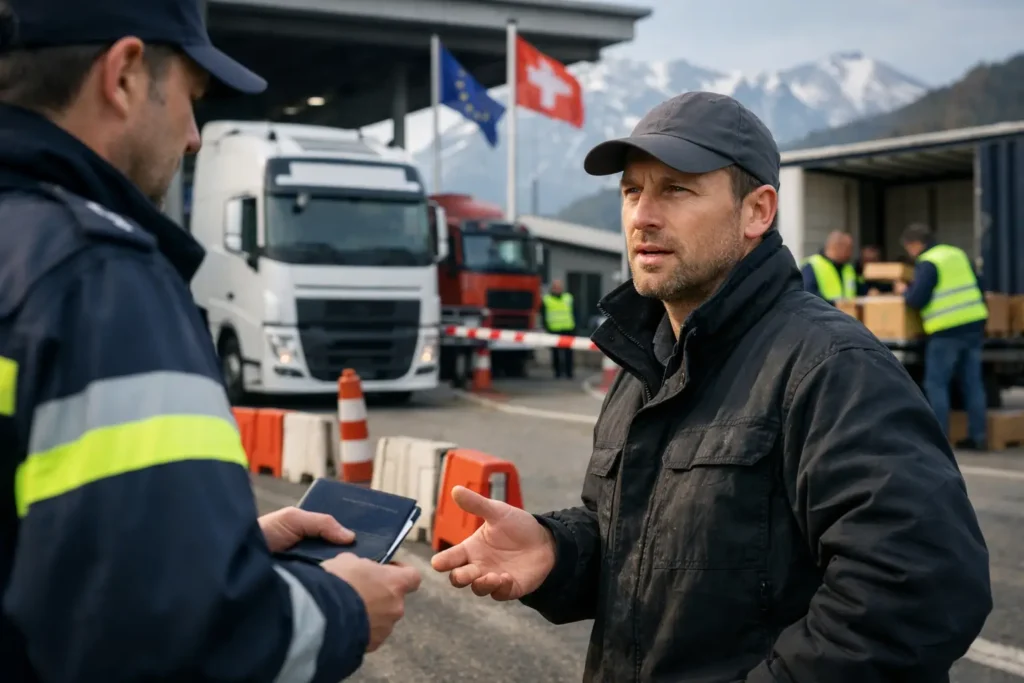
A lorry can leave on time, carry the right goods, and still miss its delivery slot because one line in the paperwork is wrong. That is the reality behind customs challenges in Europe: how to avoid costly mistakes is not just a compliance question, but a transport performance issue. For supply chain managers moving goods between the EU, the UK, Switzerland or Turkey, customs errors quickly turn into detention charges, missed production windows and frustrated customers. The risk is even higher on urgent shipments, where a customs query can erase the value of an express delivery in a matter of hours.
Why customs mistakes still disrupt European road freight
Cross-border road freight in Europe is fast when the documentation, Incoterms and commodity details match the physical shipment. It slows down when they do not. Since Brexit, UK-bound and UK-origin flows have added a layer of complexity for many shippers who previously treated the route almost like an internal European movement. Switzerland and Turkey have long required careful customs handling, but the pressure has increased as buyers expect tighter delivery windows and more visibility.
According to European Commission data, customs authorities across the EU process hundreds of millions of declarations every year. That volume explains why customs teams rely heavily on data quality and risk profiling. If your declaration does not align with the commercial invoice, packing list, transport document or commodity code, it may be flagged for inspection even when the goods themselves are straightforward.
A common operational example is a manufacturer in northern Spain shipping machine parts to the UK for an urgent line stoppage. The vehicle is ready, the driver is briefed, and the consignee expects delivery the next morning. Then customs queries the goods description because the invoice says “industrial parts” while the declaration uses a broader tariff heading. The shipment is held, the line remains down, and the extra transport cost becomes minor compared with the production loss.
Customs challenges in Europe: where costly mistakes usually happen
Most customs failures are not dramatic. They are small mismatches that create big consequences. In practice, the same problem areas appear again and again.
The first is product classification. If the commodity code is wrong, duty calculation, controls and import requirements may all be affected. This is especially sensitive for industrial components, dual-use items, chemicals and regulated residues. A code chosen for convenience rather than accuracy can trigger underpaid duty, delays or post-clearance corrections.
The second is customs value. This often goes wrong when freight, insurance, tooling costs or discounts are treated inconsistently. On some routes, businesses focus so much on moving quickly that they reuse invoice templates without checking whether the declared value still reflects the transaction correctly.
The third is origin. Preferential origin is often misunderstood, particularly where goods contain materials from multiple countries. Claiming reduced duty without proper supplier evidence is risky. If customs challenges the claim later, the importer may face back duties and administrative penalties.
The fourth is responsibility split. Incoterms matter because they define who arranges transport, who presents export or import documentation, and who carries specific risks. When shipper, consignee and carrier each assume someone else is handling customs formalities, the load can sit still while emails fly around.
How to avoid costly mistakes before the vehicle departs
The best customs control point is not the border. It is the booking stage.
Before collection, the shipper should verify five basic elements: the exact consignor and consignee details, a precise goods description, the correct commodity code, the customs value, and the agreed Incoterm. That sounds obvious, but in daily operations these fields are often copied from older shipments without review. If the goods, country of origin or commercial terms have changed, yesterday’s data can become today’s delay.
A practical safeguard is to align commercial, customs and transport teams around one shipment file. For time-critical freight, this matters even more. Express road transport only works if the paperwork is validated before the vehicle is dispatched. Sending a van within hours is useful only when customs clearance can keep pace.
There is also a trade-off to manage. Some shippers want the fastest possible collection and submit incomplete documents to avoid missing a loading slot. That can work on intra-EU flows, but on customs-controlled routes it often creates a larger delay later. Waiting 30 minutes to correct an invoice is usually cheaper than losing six hours at the frontier.
The routes where customs risk is highest
Not every European route carries the same customs exposure. For many businesses, the most sensitive corridors are those involving the UK, Switzerland and Turkey, because they combine regular road freight demand with stricter border formalities.
On UK routes, customs declarations, safety and security requirements, and transit planning all need to be handled properly. A missed reference number or inconsistent data set can stop a vehicle before embarkation or after arrival. Urgent automotive, industrial and retail replenishment loads are particularly exposed because their delivery windows are narrow.
Switzerland brings a different challenge. The route is well established, but the margin for documentary error is low. Invoice detail, statistical value and supporting papers must be clean. For high-value industrial shipments, even a small valuation issue can prompt checks.
Turkey adds complexity around customs procedures, transit management and the need for accurate shipment preparation. On some consignments, especially those with specialist or non-standard cargo, the planning sequence matters as much as the documents themselves. If the wrong vehicle is assigned or the border process is not anticipated, time is lost before the freight even reaches the crossing point.
This is where tailored transport planning makes a measurable difference. The right vehicle, the right border file and the right communication flow reduce the risk of customs becoming the weakest point in the route.
What good operators do differently
Strong customs performance is usually the result of process discipline rather than luck. Experienced operators do three things well.
They challenge vague instructions. If a booking request says “spare parts” or “samples”, that is not enough for customs. A good transport partner asks for the details early, even if that means a few extra calls before departure.
They build communication around milestones, not assumptions. On customs-sensitive routes, it is not enough to know the vehicle has left. The shipper needs visibility on document readiness, customs release and any intervention that could affect ETA. This is particularly important for just-in-time supply chains and exceptional shipments, where one border issue can affect crane bookings, unloading teams or production planning.
They match service level to customs reality. Not every shipment needs the same urgency, and not every urgent shipment can be treated the same way. A delivery needed “within hours” requires more than a fast vehicle – it requires customs readiness from the start. Since 1985, operators working across complex European corridors have learned that speed without document control is simply expensive optimism.
A practical checklist for customs challenges in Europe
If your team wants fewer border surprises, focus on these checks before dispatch:
- confirm commodity codes against the actual goods, not old templates
- verify invoice wording, values and quantities match the declaration
- check who is acting as importer or exporter of record
- confirm the Incoterm and who is responsible for each customs step
- validate origin evidence before claiming preferential duty treatment
- prepare urgent shipments as if every missing field will cost hours
One operational insight is worth stressing: most avoidable customs delays happen upstream. By the time the driver reaches the border, the opportunity to prevent the problem has usually passed. That is why the most reliable freight flows are built on pre-departure checks, clear ownership and rapid escalation when something does not look right.
Businesses shipping regularly on demanding cross-border routes do not need more theory. They need a partner who can spot risk early, react quickly and adapt the transport plan to the shipment, whether it is a standard load, a critical same-day movement or a non-standard consignment. That is often the difference between a routine crossing and a costly disruption.
Need support on your transport flows? Contact our team for a tailored solution.
Have a question or need a quote? Contact us at (+34) 943 62 95 77 (ask for Raquel) or by email at lo*******@**********rt.com