
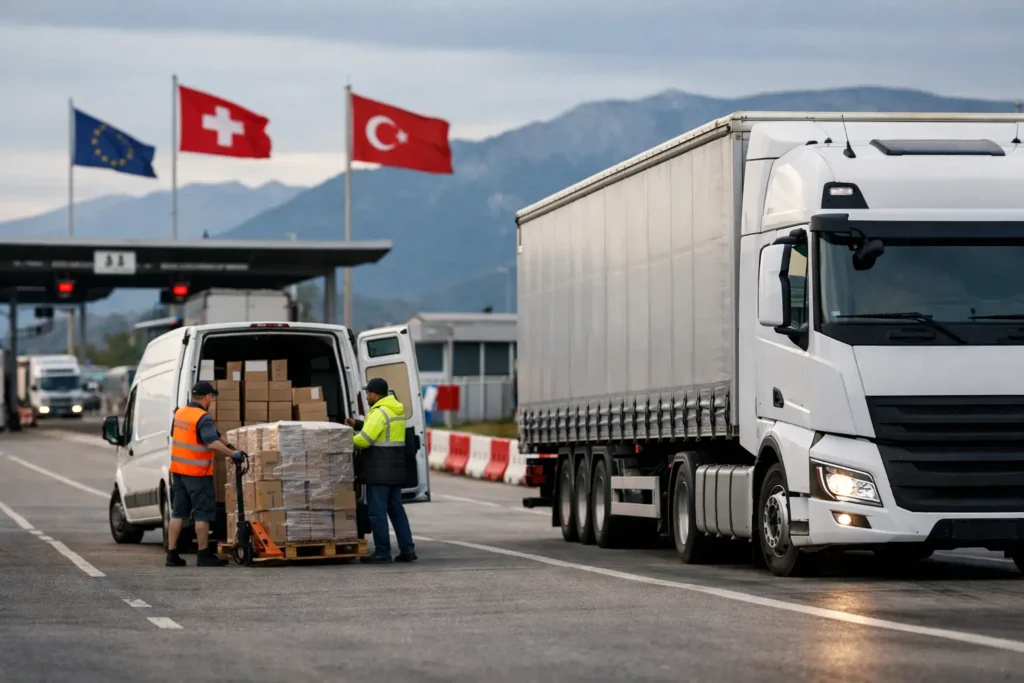
A production line stops at 14:00 because one missing component did not arrive from another European site. By 15:00, procurement is calling every transport contact they have. By 16:00, the real issue is clear: standard groupage or next-day road transport is too slow, air freight is too expensive or impractical, and the shipment still needs tight control from collection to delivery. That is exactly where the question what is ultra express road freight becomes operational rather than theoretical. For supply chain managers, it is not about speed alone. It is about protecting output, avoiding penalties, and regaining control when time has already been lost.
What is ultra express road freight in practice?
Ultra express road freight is a dedicated, time-critical road transport service designed for shipments that need collection and delivery within hours, often on a direct vehicle and frequently in under 24 hours across Europe. Unlike standard freight networks, the load is not routed through hubs, depots or scheduled transhipment points unless the operation specifically requires it.
That difference matters. In a conventional setup, freight is consolidated to improve cost efficiency. In an ultra express model, the priority shifts to elapsed time, handling reduction and direct operational control. The vehicle is selected for the urgency and size of the load, whether that means a van for a few pallets or a full lorry for larger, high-priority consignments.
For many industrial shippers, ultra express road freight is the service used when a delayed delivery would cost more than the premium transport rate. It is common in automotive, machinery, metal, electronics and maintenance supply chains where one late part can trigger line stoppage, service failure or contract exposure.
When ultra express road freight makes commercial sense
The obvious use case is emergency transport, but urgency alone is not the only trigger. The better question is whether the cost of delay exceeds the cost of dedicated express movement.
A late customs-cleared component moving from France to the Midlands, a replacement machine part needed in northern Italy overnight, or a critical export document set travelling with a controlled shipment to Turkey can all justify an ultra express solution. According to the European Commission, road freight still carries the majority of inland freight transport in the EU, which is one reason dedicated road options remain central for urgent industrial movements across connected European corridors.
There is also a risk angle. If you have a customer waiting on a just-in-time replenishment, a production shutdown can escalate fast. Lost labour hours, missed despatch windows, idle machinery and chargebacks often exceed the transport spend by a wide margin. In those cases, express road freight is not a premium add-on. It is a damage-limitation tool.
That said, it does depend on route, border complexity and loading profile. If a shipment is travelling to a customs-sensitive destination such as the UK, Switzerland or Turkey, speed on the road only works if documentation is prepared correctly from the start. A fast vehicle cannot compensate for incomplete paperwork at the frontier.
How ultra express road freight works operationally
The operational model is simple on paper and demanding in execution. Once the shipment details are confirmed, collection is arranged immediately, the right vehicle is assigned, and the consignment moves on a dedicated basis with active monitoring throughout the journey.
For the shipper, the key inputs are practical: collection address, delivery point, weight, dimensions, nature of goods, readiness time and any customs or site constraints. The planning team then matches the shipment to the most suitable vehicle and route. That sounds straightforward, but the time-critical part lies in the decisions made in the first thirty minutes.
A concrete example helps. Imagine a manufacturer near Barcelona has a failed industrial sensor and needs a replacement delivered to a plant in Lyon before the next morning shift. A standard service may miss the cut-off. Ultra express road freight would typically involve a dedicated van collecting directly from the supplier, driving without network delay, and delivering straight to the plant with milestone updates along the way. The shipment may be small, but the business impact is large.
The operational insight here is that the best urgent moves are won before departure. Good express planning reduces avoidable waiting time at collection, avoids unsuitable vehicle allocation and checks border or delivery restrictions early. This is especially relevant for routes involving ferry crossings, alpine transit, out-of-hours unloading or customs formalities.
The main advantage is not just speed
Speed gets the attention, but control is usually the bigger advantage. Ultra express road freight reduces touchpoints, handovers and uncertainty. That means fewer opportunities for misrouting, damage or communication gaps.
For supply chain teams, that often translates into better decision-making. If a shipment is monitored closely and progress is communicated clearly, a plant manager or customer service team can plan around the expected arrival time rather than reacting in the dark. In urgent logistics, visibility is not a luxury. It is part of the service.
There is also a confidentiality and security benefit in dedicated transport. Sensitive goods, prototypes, urgent spare parts or regulated industrial materials are not moving through multiple terminals. Fewer handling stages generally mean lower exposure.
However, the trade-off is cost. Ultra express road freight is more expensive than standard scheduled road transport because the vehicle is prioritised for one urgent movement rather than optimised through consolidation. That is why experienced shippers reserve it for high-impact freight, not routine replenishment.
Customs and cross-border limits you cannot ignore
On paper, direct road transport sounds fast everywhere. In reality, cross-border urgency depends on how well the movement is prepared.
For shipments to the UK, Switzerland or Turkey, customs readiness can determine whether an express move performs as promised. If commodity codes, invoices, export declarations or transit references are incomplete, the fastest collection in Europe will still end up waiting. The UK Government and Swiss customs authorities both make clear that documentation accuracy is central to border flow, particularly for commercial freight.
Driver hours, weekend restrictions and local delivery conditions also shape what is realistic. A same-night movement from Belgium into Germany is one thing. An urgent despatch from Spain to a customer in central Turkey is another. Both can be handled by express road freight, but the transit design, border planning and communication cadence will differ.
This is where a tailored service matters. Urgent transport should not mean forcing every load into the same operating model. Some shipments need a dedicated van and immediate departure. Others need a larger vehicle, customs pre-checks and coordinated handover windows. The route decides the method, not the other way round.
How to decide if ultra express road freight is the right option
If you are assessing whether to use ultra express road freight, start with business impact rather than transport mode. Ask what happens if the goods arrive tomorrow instead of tonight. If the answer involves downtime, missed installation, contractual exposure or a customer escalation, then express road freight deserves serious consideration.
It also helps to assess four points quickly:
- How time-critical is the delivery in financial terms?
- Can the goods move on a dedicated vehicle without special handling delays?
- Is customs documentation complete for any non-EU border?
- Is there a realistic unloading window at destination?
When those points line up, ultra express road freight can be the most reliable solution on the table. The International Road Transport Union regularly highlights road freight’s role in maintaining flexible, responsive supply chains, and that flexibility is exactly what urgent movements depend on.
For businesses shipping across Europe and into more complex markets such as the UK, Switzerland or Turkey, the value is clear: fewer delays from network handling, better control, and a service built around the cost of failure, not just the price of transport.
For companies that manage recurring urgent flows, it also makes sense to work with a partner that can react quickly, quote clearly and adapt vehicle type to the load rather than forcing a standard template. That is especially relevant when the shipment profile changes from one move to the next.
Time-critical freight rarely arrives at a convenient moment. It usually appears when the production schedule is already under pressure and internal options are running out. In those moments, knowing exactly what ultra express road freight is helps you make a faster, better transport decision – one based on risk, route reality and delivery certainty.
With more than 40 years of experience in international road freight, MAP Transport supports companies that need that level of control on urgent cross-border movements.
Need support on your transport flows? Contact our team for a tailored solution.
Have a question or need a quote? Contact us at (+34) 943 62 95 77 (ask for Raquel) or by email at lo*******@**********rt.com