
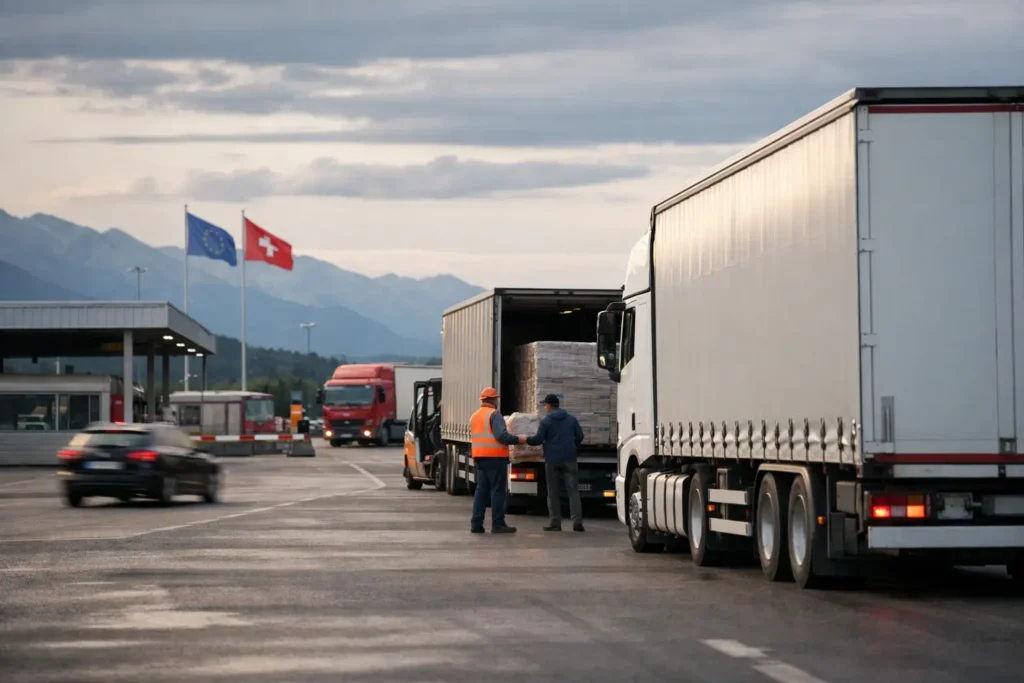
A missed production slot in northern Italy, a customs hold on a UK movement, or a late delivery to a Scandinavian site can turn one road shipment into a wider supply chain problem. That is why full lorryload transport Europe is rarely just about finding available capacity. For supply chain managers, the real question is whether the movement will arrive on time, with the right documents, under the right conditions, and with clear follow-up throughout the route. When a full load carries high-value goods, urgent replenishment, or customer-critical stock, poor planning quickly becomes expensive.
When full lorryload transport Europe is the right choice
Full lorryload is usually the best fit when you need one vehicle dedicated to a single shipment from collection to delivery. That matters for factories shipping full pallets of finished goods, metal suppliers moving dense loads, or distributors working to fixed delivery windows. You reduce handling points, simplify accountability, and cut the chance of part-load delays caused by consolidation hubs.
The cost logic is not always as simple as rate per kilometre. A full load may look more expensive than groupage at first glance, but the comparison changes when you factor in stock-out risk, late delivery penalties, production stoppages, and claims linked to extra handling. For many industrial flows, especially repeat lanes, the higher transport spend on paper can protect a much larger commercial value.
A practical example is a manufacturer moving urgent components from Germany to Spain after a supplier disruption. With groupage, the freight may lose time waiting for consolidation or transfer. With a dedicated full load, collection can be arranged directly and monitored closely, which gives the consignee a firmer delivery plan and reduces downtime risk.
The operational issues that decide performance
On paper, a direct road movement across Europe can look straightforward. In practice, performance depends on several details being right before the vehicle is dispatched.
The first is load profile. Weight, dimensions, packaging method, stackability, and loading constraints all affect vehicle assignment and route planning. A dense metal load and a fragile high-value shipment may both fill one vehicle commercially, but they do not carry the same operational risk. If the wrong equipment is booked, the issue appears at collection, not in the quote.
The second is delivery requirement. Many delays are not caused by transit itself, but by site restrictions. Some receivers have narrow unloading windows, booking systems, or specific vehicle access rules. Others need lift capability, side loading, or named references on paperwork. If these conditions are not confirmed at the start, a lorry can arrive on time and still fail the delivery.
The third is border and customs readiness. This is where complex routes become less forgiving. According to the European Commission, road freight remains the dominant inland freight mode in the EU, which means congestion, driver hours, and border formalities continue to shape reliability on cross-border lanes. For UK, Switzerland, and Turkey flows, customs data quality matters as much as transport planning.
An operational insight that experienced shippers recognise quickly is this: the shipment is often won or lost before departure. Good execution starts with complete pre-alerts, correct commodity information, and realistic timing at origin and destination.
Customs and border risk on complex routes
For intra-EU traffic, full lorryload usually benefits from fewer administrative barriers. Once you move into the UK, Switzerland, or Turkey, the margin for error narrows. Customs clearance, transit procedures, invoice data, origin details, and consignee readiness all have a direct impact on lead time.
This matters because a full load often carries higher-value cargo or a full production batch. If documents are incomplete, the cost of waiting rises fast. A vehicle standing at the border or parked while awaiting clearance affects not only transport spend but also delivery promises further down the chain.
Take a shipment from Belgium to the UK for a retail launch or industrial installation. The vehicle may be ready, the route may be planned, and the delivery slot may be booked, but if the customs entries do not match the commercial documents, the movement stalls. The same applies on Switzerland lanes, where document precision and commodity classification can decide whether the crossing is smooth or delayed.
IRU has repeatedly highlighted border waiting time as a significant issue for international road transport. For shippers, that means the transport provider needs to do more than move the freight. It needs to coordinate documents, timing, and communication between shipper, consignee, customs parties, and driver support.
Speed matters, but only when matched to the shipment
Not every full load needs express service, but some absolutely do. Plant shutdown prevention, line-side replenishment, event-related goods, and customer recovery shipments all require faster decision-making and a different operating model.
The mistake is to treat urgency as just a shorter lead time. In reality, urgent transport needs immediate vehicle matching, direct communication, and active monitoring from collection through delivery. If a shipment must be delivered within hours or in under 24 hours across Europe, the routing, driver planning, and contingency thinking all change.
This is where tailored service matters. Some loads belong on a standard dedicated lorry. Others need a faster van or a specialist setup because time is worth more than payload efficiency. For supply chain teams, the useful question is not simply, « How quickly can it move? » It is, « What is the cost of not moving it now? »
Eurostat data consistently shows the scale of road freight in European trade, but volume alone does not solve urgency. Time-critical shipments need operational control, not generic capacity. That is especially true when the route includes customs, remote destinations, or strict delivery appointments.
How to manage cost without increasing delivery risk
Cost control in full lorryload transport Europe is rarely about pushing the transport rate down to the lowest possible level. In practice, lower quoted cost can create hidden spend elsewhere.
One example is poor booking discipline. If shipment details are incomplete at enquiry stage, the first quote may not reflect reality. A later change in loading metres, weight, packaging, or collection readiness can trigger re-planning costs or missed collection windows. Another is using a standard service where the shipment profile actually requires specialist handling, security, or tighter follow-up.
The better approach is to define the shipment properly from the start. For a quote that reflects real operating conditions, provide:
- exact collection and delivery points
- pallet count, weight, and dimensions
- goods description and any special handling needs
- target collection date and delivery deadline
- customs status and required documents where relevant
That level of detail helps avoid rate surprises and gives transport teams room to choose the right vehicle and route. It also improves quote speed, which matters when procurement teams are comparing options under time pressure.
A useful rule for regular shippers is to review not just freight spend, but exception cost. If the lane suffers repeated delays, claims, or escalations, the transport model needs adjusting.
What strong execution looks like on a European full-load movement
A reliable full-load service is visible in the way it is managed, not just the way it is sold. You should expect fast response at enquiry stage, realistic transit commitments, clear confirmation of shipment requirements, and updates that make it easier to manage your own stakeholders.
For complex lanes, multilingual coordination also matters. When collection is in one country, customs formalities are handled in another context, and delivery is to a plant with strict receiving rules, communication gaps become operational risk. A transport partner that can coordinate across those touchpoints reduces friction and shortens decision cycles.
This is where experience shows. A provider handling European import and export road freight every day will know when a route needs standard planning, when it needs an urgent response, and when it needs exceptional handling because the cargo is oversized, heavy, or operationally sensitive. That difference is practical, not theoretical.
Since 1985, MAP Transport has worked with companies that need exactly that kind of control across European road freight, including more demanding flows involving the UK, Switzerland, Turkey, and beyond. The value is not only in moving the load, but in matching the service level to the operational risk behind it.
If your business depends on delivery certainty, full lorryload should be planned as a risk decision as much as a transport purchase. The strongest results usually come from clear shipment data, realistic timing, and a partner able to adapt when the route becomes less predictable.
Need support on your transport flows? Contact our team for a tailored solution.
Have a question or need a quote? Contact us at (+34) 943 62 95 77 (ask for Raquel) or by email at lo*******@**********rt.com