
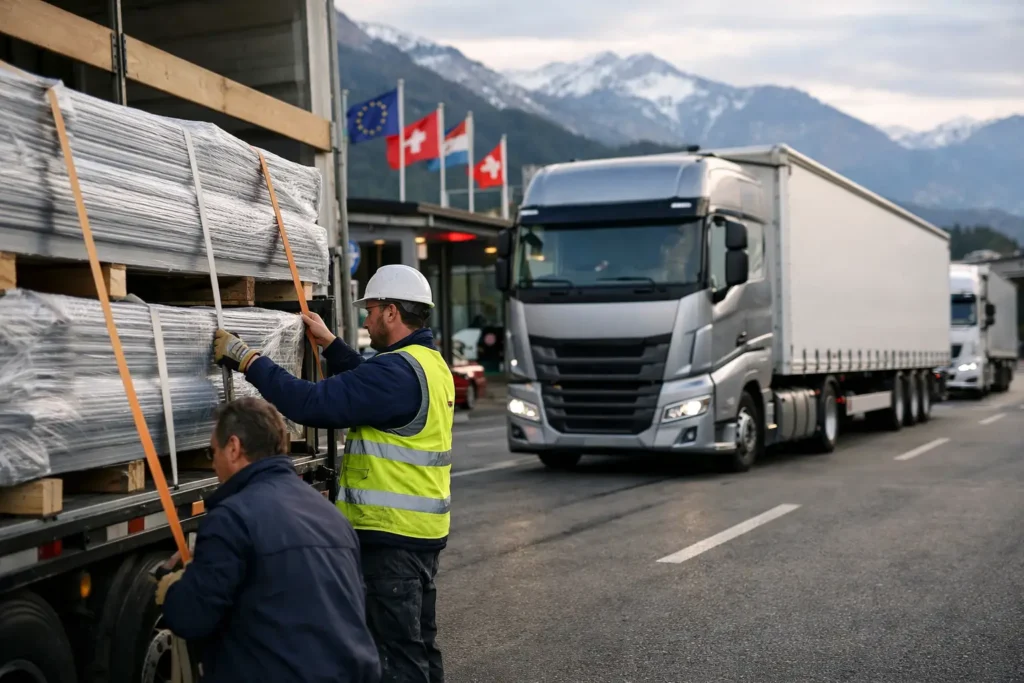
A coil delayed at a border, a pallet of profiles rejected for poor securing, a just-in-time delivery missed by half a day – for aluminium shippers, small failures quickly become production problems. Aluminium transport in Europe is rarely difficult because of weight alone. The real pressure comes from mixed product formats, strict delivery slots, cross-border paperwork and the cost of disruption when material does not arrive as planned. For supply chain managers moving coils, billets, sheets or finished components, transport performance is measured in downtime avoided, claims reduced and customers kept informed when routes become less straightforward.
Why aluminium transport in Europe needs more than standard planning
Aluminium moves in very different forms, and that changes the transport risk from the start. Extruded profiles can be long, light and awkward to secure without damage. Coils concentrate weight in a small footprint and demand precise axle-load planning. Finished parts may be high value and vulnerable to scratching, moisture or poor handling at transhipment points.
That is why aluminium transport in Europe often needs a tailored road freight plan rather than a standard booking. The vehicle type, loading method, transit time and border formalities need to match the product, not the other way round. A shipper sending machined aluminium parts from northern Italy to Germany has a different risk profile from a producer moving raw material into Turkey or shipping urgent replacement components to the UK.
The commercial impact is not minor. According to the European Commission, road freight remains the dominant inland mode for goods movement across the EU, which means road reliability still shapes plant continuity and supplier performance in most industrial flows. When aluminium is feeding production lines, even a short delay can trigger rescheduling, labour inefficiency and contractual pressure.
The main operational risks in aluminium transport in Europe
The first risk is damage during loading and transit. Aluminium is lighter than steel, but that does not make it easier to move safely. Long profiles can flex if unsupported. Packed sheets can suffer edge damage from poor stacking. Painted or finished surfaces need protection from abrasion, water ingress and careless forklift contact.
The second risk is delay caused by route complexity. Cross-border road freight within the EU may be simpler than non-EU movements, but it is not frictionless. Congestion, weekend driving restrictions, waiting times at terminals and local delivery access rules all affect lead time. Add customs procedures for the UK, Switzerland or Turkey, and a routine movement can become sensitive very quickly.
The third risk is mismatch between urgency and equipment. Some aluminium flows are planned weekly replenishment; others are line-down situations that need collection within hours. Using a standard groupage model for an urgent consignment usually saves money only until the delivery window is missed.
There is also a security angle. High-value finished aluminium components, especially for automotive or industrial manufacturing, require controlled handling and clear shipment visibility. A vague update is not enough when a customer needs to know whether unloading will happen at 14:00 or the next morning.
Choosing the right road freight setup for aluminium loads
The right setup starts with the shipment profile: dimensions, weight distribution, packaging, sensitivity and delivery deadline. That sounds obvious, but many transport issues begin because only weight and postcode are shared at quote stage.
For standard aluminium pallets, sheets or boxed components, a classic full load or part load service is often the most efficient option. It keeps costs under control while allowing proper planning around collection slots and delivery appointments. For more urgent flows, a dedicated van or direct lorry service is often the safer decision because it removes unnecessary handling and cuts the chance of delay.
For oversized lengths, heavy bundles or non-standard pieces, the transport plan needs another level of preparation. Load securing, route checks, loading equipment on site and any permit requirements should be reviewed before the vehicle is assigned. This is where specialist handling matters far more than headline transit time.
A practical example: a manufacturer shipping aluminium profiles from Spain to a customer in southern Germany may initially see the load as straightforward because the weight is modest. In reality, if the profile lengths exceed standard loading dimensions, the wrong vehicle choice can create securing problems, wasted space and a higher damage risk. A better result usually comes from matching the vehicle and securing method to the load from the outset, even if the first quoted rate is not the absolute lowest.
Customs and border control on UK, Swiss and Turkish routes
This is where aluminium transport in Europe becomes operationally sensitive. Shipments to the UK, Switzerland and Turkey need accurate documentation, disciplined timing and close coordination between shipper, carrier and consignee. Errors that seem small on paper can add hours or even a full day to transit.
For the UK, customs declarations, commodity codes, origin data and commercial invoice accuracy all matter. The same is true for Switzerland, where border formalities are efficient when prepared properly but unforgiving when details do not align. Turkey adds another layer, with route planning and customs execution requiring experienced follow-up.
Industry bodies such as IRU regularly underline how border inefficiency affects transit predictability across international road freight networks. For aluminium suppliers working to production schedules, the lesson is simple: customs readiness is not an admin task at the end. It is part of transport planning from the start.
One operational insight worth stressing is that urgent shipments across customs borders should not be handled like standard freight with a faster label attached. If documents are not validated before departure, the vehicle may arrive quickly only to wait at the frontier. Speed without preparation is not an express service.
When urgent aluminium transport is the right decision
Not every late order deserves an express vehicle. But some situations clearly do. If a production line is waiting for machined aluminium parts, if a subcontractor has failed to deliver, or if replacement material is needed to prevent a missed customer shipment, the cost of downtime can exceed the transport premium by a wide margin.
In those cases, a dedicated express movement across Europe can be the most rational option. The value comes from direct routing, reduced handling and immediate operational updates. For supply chain teams, this means fewer assumptions and faster decisions if the delivery plan changes on the road.
The decision should still be commercial, not emotional. Ask three questions: what is the real cost of stoppage, how fixed is the delivery deadline, and can customs or site restrictions undermine the time gain? If the answers support urgency, a time-critical service is justified. If not, a well-managed standard movement may be enough.
How to reduce cost and claims on aluminium transport in Europe
The best savings usually come from fewer incidents, not just lower rates. A cheaper move becomes expensive very quickly if it leads to damaged edges, rejected goods or repeated delivery failures.
The most effective way to reduce cost is to improve shipment quality before collection. Clear dimensions, accurate weight, packaging details, loading constraints and delivery requirements all help the haulier plan properly. If the goods are fragile, say so. If a forklift cannot load from both sides, say so. If the consignee has a strict booking window, build that into the plan.
It also helps to separate routine from exceptional flows. Standard replenishment can be managed for efficiency. Urgent shipments should be treated as a different service with a different operating model. Oversized or sensitive loads need specialist review early, not after collection has been requested.
For companies shipping regularly, consistency matters. Repeating the same shipment data each time, using agreed packaging standards and working with a partner that understands cross-border industrial freight reduces friction and claim exposure over time. This is especially relevant on demanding corridors involving the UK, Switzerland, Scandinavia or Turkey, where timing and paperwork discipline make a visible difference.
MAP Transport has built its road freight model around that principle since 1985: match the vehicle and service level to the load, keep customers informed throughout transit and adapt quickly when routes become complex.
Aluminium flows reward careful planning more than generic transport buying. The businesses that perform best are usually not the ones chasing the lowest line-item rate, but the ones reducing avoidable delay, damage and uncertainty across each movement. If your aluminium traffic includes urgent deliveries, customs-sensitive routes or non-standard loads, a more tailored road freight approach usually pays for itself quite quickly.
Need support on your transport flows? Contact our team for a tailored solution.
Have a question or need a quote? Contact us at (+34) 943 62 95 77 (ask for Raquel) or by email at lo*******@**********rt.com