
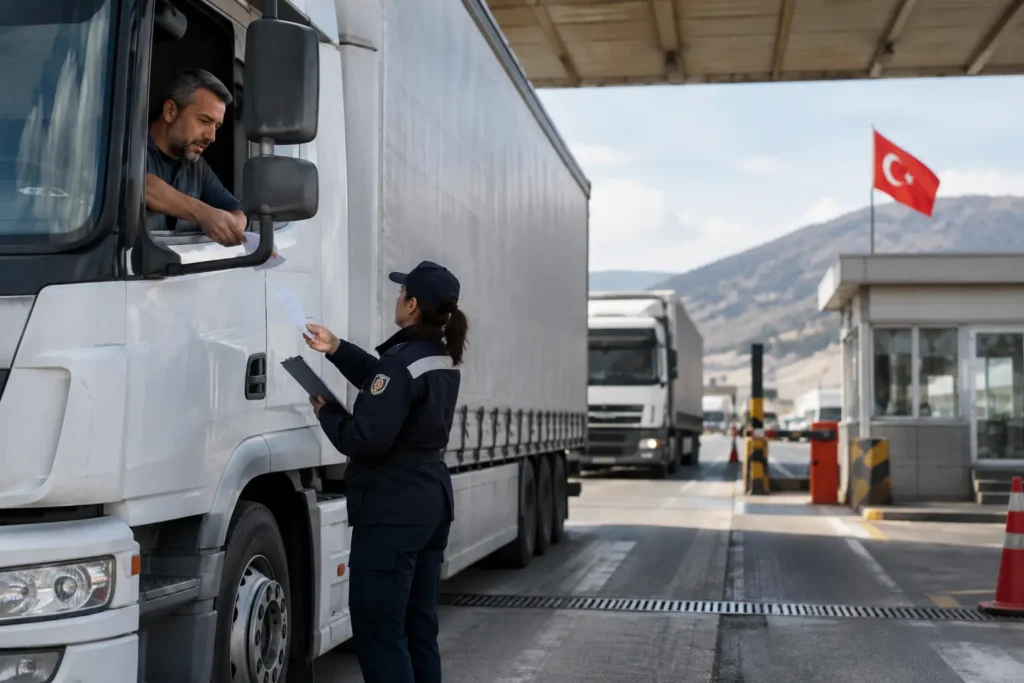
A lorry can arrive at a border on schedule and still lose a full delivery day before it is cleared to move. For supply chain managers, border detention is rarely one dramatic failure. More often, it is a small mismatch between the goods, the paperwork, the declaration and the transport plan – discovered when there is little room left to recover. The top causes of border detention in road freight are especially relevant on UK, Swiss and Turkish routes, where a routine cross-border movement can quickly become a customs event. Knowing where friction starts allows teams to prevent avoidable holds, protect production schedules and keep customers informed.
Top causes of border detention: customs declarations that do not match
The most frequent reason for a detention is inconsistent information across commercial documents and customs data. A customs declaration may show one commodity code, while the commercial invoice uses a broad product description and the packing list gives a different quantity or weight. Each document can look plausible in isolation. Together, they raise a query.
Product descriptions are a common weakness. Terms such as “parts”, “samples” or “industrial goods” do not give customs authorities enough information to assess the consignment. The description should identify what the item is, what it is made from and, where useful, its intended use. This matters particularly for machinery components, metal products, chemical-related goods and dual-use-sensitive items.
Classification, value and origin must also align. An incorrect commodity code can affect duty, import controls and whether a licence is required. A declared value that does not reflect the invoice, transport charges or Incoterms can lead to a valuation challenge. Preferential origin claims need supporting evidence, not an assumption based on where a product was shipped from.
The UK is a clear example. Imports from the EU require formal customs processes, and safety and security declarations apply to EU goods entering Great Britain. A shipment that used to move with a delivery note alone now needs its data prepared before the lorry reaches the crossing. Switzerland and Turkey bring their own declaration and transit requirements, so copying a process designed for intra-EU transport is a costly shortcut.
Incomplete permits and controlled-goods checks
Some loads are detained because the freight has been declared correctly but cannot be released without the right supporting approval. This can affect goods subject to sanitary, phytosanitary, veterinary, excise, environmental, military or dual-use controls. Regulated residues and waste-related materials require particular care because the movement may depend on prior notification, movement documentation and country-specific acceptance rules.
The operational issue is timing. A permit obtained after loading may not be enough if a pre-notification, reference number or inspection booking was required before arrival. Border authorities cannot waive the process because a production line needs the goods urgently.
Before confirming collection, establish whether the commodity, origin, destination and final use trigger additional controls. Confirm who holds the licence, who submits the pre-notification and which documents must travel with the driver. This ownership point matters: an exporter, importer, broker and carrier can all assume another party has completed the task.
A practical example is a manufacturer sending replacement electrical equipment from northern Spain to a customer in the UK. The goods are needed to restore a production line, so an express vehicle is booked. If the invoice identifies only “electrical spares” and the importer has not confirmed the correct commodity code or customs entry, the fastest vehicle cannot create the missing clearance. Urgent transport reduces transit time, but it does not remove border controls.
Transit, seals and route changes can trigger detention
On complex routes, goods may move under a transit procedure before final import clearance. This is common when freight enters through one border point but is cleared inland, or when cargo travels through several customs territories. The transit reference, guarantee, office of departure, office of destination and discharge process all need to be correct.
A detention can occur if the driver cannot present the transit reference, a seal is damaged, the lorry arrives at the wrong office, or the movement is not discharged promptly at destination. Route changes also deserve attention. Diversions caused by ferry disruption, weather, congestion or a missed crossing can affect a planned customs sequence.
Turkey and the Caucasus demand particularly close coordination because transport may involve several borders, transit regimes and different working hours at crossing points. The best route on a map is not always the best customs route for a specific commodity or delivery commitment. A transport plan should account for border opening times, document presentation points, authorised parking and a realistic recovery option if the vehicle is selected for inspection.
Vehicle, driver and load presentation failures
Not every border hold originates in the customs office. Roadside checks can stop a movement when vehicle documentation, driver documents, load security or weight compliance is inadequate. For exceptional shipments, missing permits, unsuitable escort arrangements or a mismatch between the approved dimensions and the actual load can prevent onward travel.
Driver-hours planning is another practical risk. Under EU rules, the normal daily driving limit is generally nine hours, with limited extensions. If a border inspection consumes several hours near the end of the driver’s available time, the vehicle may have to stop before reaching its scheduled delivery point. This is why a collection plan that appears achievable on paper can fail after even a short customs intervention.
Load presentation matters too. Customs officers must be able to inspect cargo safely and verify packages against documents. Poorly labelled pallets, inaccessible goods, mixed consignments without clear separation or broken seals can extend a routine check. For time-critical shipments, a dedicated van or direct lorry service can reduce handling points, but it must still be selected with the load, route and customs formalities in mind.
How to reduce the risk of border detention
The strongest prevention measure is to treat customs readiness as a pre-departure control, not an administrative task completed once the lorry is on the road. Build a release checklist into the booking process and apply it before collection is confirmed.
For each shipment, verify the commercial invoice, packing list, commodity code, origin, Incoterms, customs representation and declared value. For non-EU movements, confirm the importer’s customs instructions, required references and any licences or control documents. The transporter should receive the final movement instructions early enough to plan the correct crossing, transit process and driver brief.
There are four questions worth resolving before dispatch:
- Is the goods description specific enough for customs assessment?
- Do document quantities, weights, values and codes match exactly?
- Does the route require a transit movement, pre-notification or special permit?
- Who is available to answer a customs query outside normal office hours?
That final question is often overlooked. A border detention becomes expensive when the driver is waiting, the broker cannot be reached and the consignee has no escalation contact. Named responsibilities and multilingual communication can make the difference between a brief clarification and an overnight hold.
For regular lanes, review every detention or near miss. Look for repeat failures by product type, supplier, customer site or border point. If a specific commodity is repeatedly queried, improve the master product description and classification process rather than correcting the same invoice each week.
Turn border preparation into delivery-time protection
Border risk cannot be eliminated. Authorities can select any consignment for inspection, and disruptions at ports or crossings may arise without warning. What can be controlled is the quality of shipment data, the suitability of the transport plan and the speed of response when an issue appears.
For a standard EU movement, this may mean a simple document check. For the UK, Switzerland, Turkey or a multi-border transit route, it often means coordinating customs instructions alongside vehicle allocation and delivery timing. MAP Transport has managed international road freight since 1985 and can match standard, express or exceptional transport to the customs and operational demands of the shipment.
The useful objective is not merely to get freight across the border. It is to give the receiving site a delivery plan that remains credible after customs scrutiny.
Have a question or need a quote? Contact us at (+34) 943 62 95 77 (ask for Raquel) or by email at lo*******@**********rt.com
Need support on your transport flows? Contact our team for a tailored solution.