
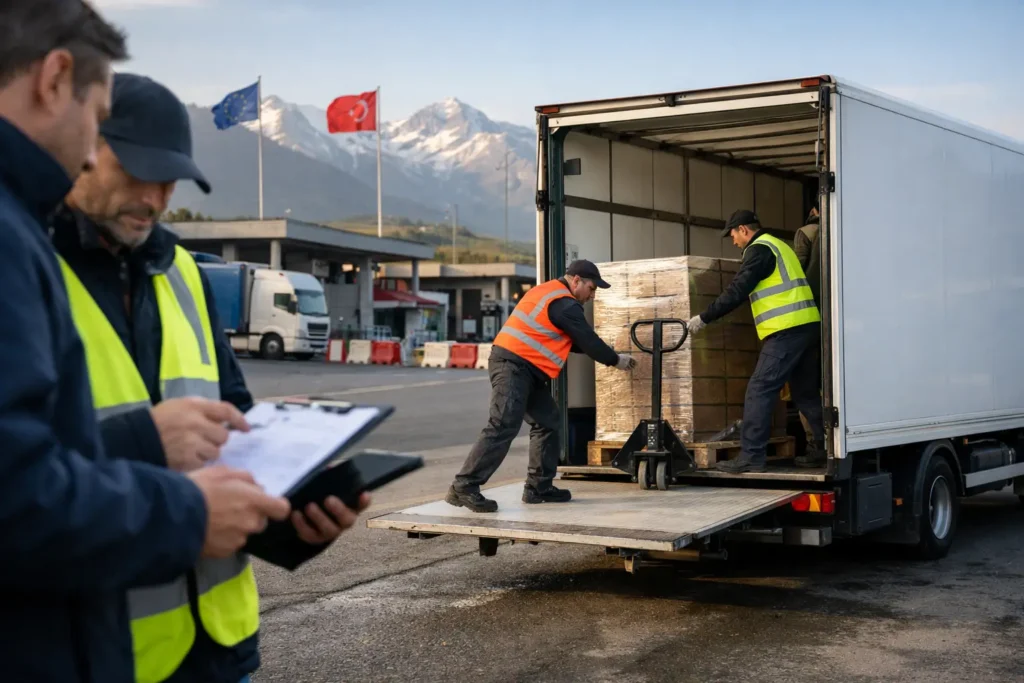
A production line rarely stops because of one big mistake. More often, it stops because a small urgent shipment was treated like routine freight. A missing component in Lille, a customs hold on the Swiss border, or the wrong vehicle booked for a late collection can turn a manageable issue into lost output, penalties and unhappy customers. This express freight planning guide is written for teams that already know the pressure of cross-border road transport and need practical ways to move faster without creating new risks.
Start with the real urgency, not just the collection time
When a shipment is labelled urgent, the first question should not be, “How quickly can it leave?” It should be, “What delivery failure are we trying to prevent?” That distinction matters. Some consignments need the fastest possible direct run. Others need certainty around a factory slot, customs clearance, unloading restrictions or a night delivery window.
A useful planning rule is to define urgency in operational terms. Is the load line-down? Is it preventing a customer dispatch? Is it tied to a vessel cut-off, a maintenance shutdown or a contractual deadline? Once the commercial impact is clear, the transport plan becomes sharper. You can decide whether a dedicated van is enough, whether a larger vehicle is required, or whether split loading creates more risk than it saves.
According to IRU reporting on driver shortages and market pressure in Europe, capacity constraints continue to affect service reliability in time-critical road freight. That means late booking is not just expensive – it reduces your options. In urgent transport, the cost of poor planning is often paid in missed availability rather than rate alone.
What an express freight planning guide should cover before booking
The strongest urgent moves are usually won before the vehicle is assigned. For supply chain managers, that means collecting a short set of details that remove ambiguity for the operator and the driver.
At minimum, your plan should confirm the exact collection address, ready time, delivery deadline, dimensions, weight, loading method and named site contacts. That sounds basic, but many delays come from details that sit outside the rate request. Can the collection point load from the side? Is there a forklift on site after 18:00? Does the consignee require a booking reference before arrival? Will the shipment cross into the UK, Switzerland or Turkey, where customs and transit documents can make or break delivery time?
One operational insight stands out here: in express freight, incomplete information creates more delay than distance. A 1,400 km direct road move with clear documents and confirmed handling requirements will often perform better than a 400 km rush shipment with uncertain loading conditions.
For more complex flows, the planning should also cover whether the goods are standard, high value, regulated or difficult to handle. That affects vehicle choice and route design. A dedicated van may be right for a critical small load, while palletised industrial goods with specific restraint needs may require a different setup. The point is simple – urgent does not mean one-size-fits-all.
Express freight planning guide for customs-sensitive routes
The biggest planning gap in urgent road freight is often customs. This is where many otherwise well-run shipments lose hours. If your route touches the UK, Switzerland or Turkey, speed on the road means very little if documents are wrong or incomplete.
Take a common example. A manufacturer in northern Spain needs replacement machine parts delivered to a customer near Birmingham within 24 hours. The transport leg is possible. The weak point is border readiness. If commodity codes, invoice values, Incoterms and customs instructions are not aligned before departure, the vehicle may reach the frontier on time and still miss the delivery window.
This is why urgent customs planning should happen at quote stage, not after collection. The shipment owner and transport partner need clarity on who is acting as exporter, who is responsible for import formalities, whether transit is needed, and whether the consignee is ready to clear immediately. On Swiss flows, even short-distance road moves can stall if accompanying paperwork is inconsistent. On Turkey routes, timing around border crossings and document checks needs to be realistic from the outset.
For current customs guidance, teams often rely on official sources such as the European Commission and HMRC. The practical lesson is not to drown the shipment in paperwork, but to ensure the essentials are correct before wheels move.
Vehicle choice is a planning decision, not just an availability issue
One of the most expensive mistakes in urgent transport is choosing a vehicle based on what is nearby rather than what the shipment needs. That can lead to repacking, refusals at site, poor load security or unnecessary rate inflation.
For smaller, time-critical consignments, a dedicated van often protects speed because it reduces handling and keeps the route direct. For larger palletised shipments, the answer may be a dedicated lorry with the right loading access and restraint capability. For awkward, oversized or non-standard loads, urgent delivery is still possible, but only if the route, permits and handling method are checked early enough.
This is particularly relevant on industrial flows where dimensions alone do not tell the full story. A 2.8-metre crate may fit physically, yet still create issues if the site only allows rear loading, if the unloading point has height limits, or if the goods cannot be transhipped. Good planning looks at the full movement, not just the linehaul.
A service model built around matching vehicle type to shipment requirement usually performs better than forcing every urgent load into the same operating pattern. That matters when delivery windows are tight and there is no room for improvisation.
Build contingency into the route without slowing it down
The phrase “express” can tempt teams to plan for the best-case scenario. That is rarely enough on cross-border freight. A better approach is to build a fast plan that also recognises likely friction points.
In practice, that means checking driving restrictions, local unloading rules, weekend limitations, border traffic and handover risk before departure. It also means confirming whether the consignee can actually receive at the promised time. Many urgent shipments fail at the final step because the site is closed, the reference is missing, or security procedures were not shared with the driver.
A straightforward way to handle this is to create one primary route and one fallback option. The fallback may involve a different crossing point, a revised delivery sequence, or a later cut-off agreed in advance with the consignee. The aim is not to overcomplicate planning. It is to avoid having no answer when conditions change.
This is where active communication matters. Supply chain managers do not need more generic tracking updates. They need clear status information when a shipment is moving towards a risk point. If customs are cleared, if the vehicle is running to schedule, or if the delivery slot needs to shift by an hour, that information helps protect downstream operations.
How to use this express freight planning guide in daily operations
The best urgent transport teams do not treat express freight as a separate world. They build repeatable planning habits so urgent bookings can move quickly without skipping critical checks.
A simple working method is to align internal teams around a fixed booking brief. Purchasing, customer service, warehousing and logistics should all work from the same shipment facts. That avoids the classic problem where the carrier receives three different versions of the collection time or the document pack. For recurring lanes, it also helps to maintain route notes covering site restrictions, preferred customs process and realistic transit expectations.
For example, if you regularly move spare parts from Belgium into Switzerland, record the consignee’s clearance process, unloading times and contact chain once – then reuse it. If you often ship urgent industrial goods into Scandinavia during winter periods, factor seasonal disruption into lead-time promises. Speed improves when known risks are documented rather than rediscovered on every order.
Since 1985, companies managing urgent and complex road freight have learned the same lesson repeatedly: fast transport depends on good preparation more than fast typing. The operator who asks the right questions early is usually the one who protects the delivery.
When your flows include customs-sensitive borders, demanding delivery windows or specialist load requirements, it helps to work with a partner that can quote quickly, assign the right vehicle and keep you informed at every stage. That is especially true when the shipment is commercially critical and there is no appetite for guesswork.
Need support on your transport flows? Contact our team for a tailored solution.
Have a question or need a quote? Contact us at (+34) 943 62 95 77 (ask for Raquel) or by email at lo*******@**********rt.com