
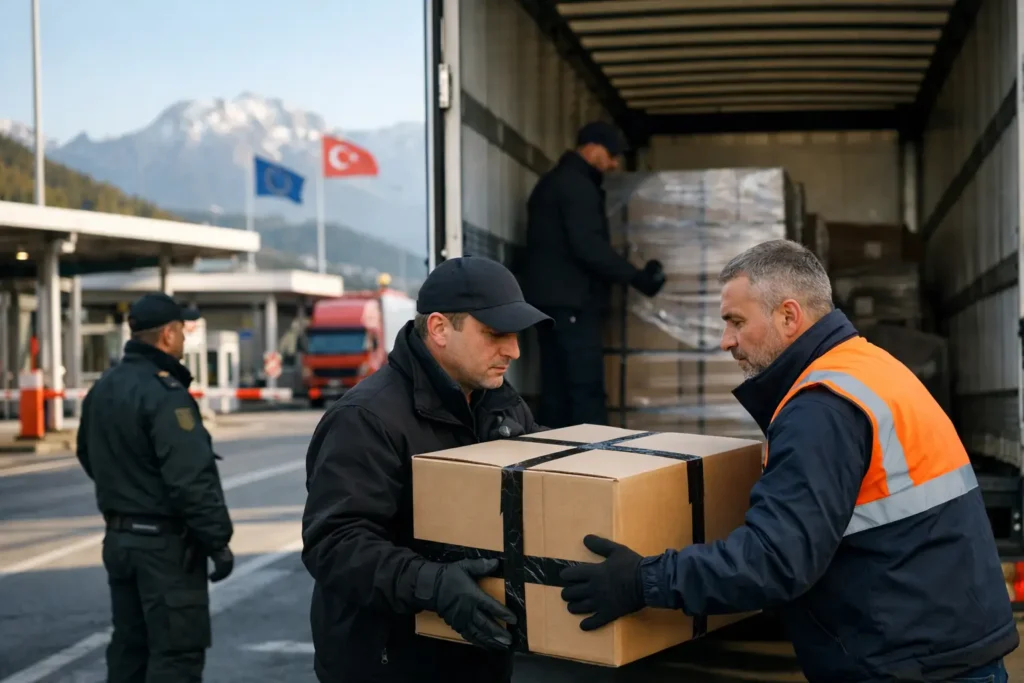
A shipment does not need to be high value to be high risk. A pallet of prototypes, regulated components, confidential printed materials or launch stock can create serious exposure if too many people know what it is, where it is going or when it will arrive. For supply chain managers, confidential freight handling procedures are not an administrative extra. They are a practical way to reduce theft risk, protect commercial information and keep urgent cross-border movements under control, especially on routes involving customs, handovers and tight delivery windows.
Why confidential handling matters in road freight
Confidentiality failures in transport rarely happen because one dramatic rule is broken. More often, they come from routine oversharing. Shipment references reveal the consignee. Packing labels describe the goods too clearly. Too many subcontracted touchpoints mean too many people can identify a load. A delay at a border then exposes the freight for longer than planned.
This matters commercially as much as operationally. If a competitor learns that a product launch is moving early, if a customer can identify your sourcing pattern from transport paperwork, or if a driver discusses a sensitive route too freely at a service area, the damage can go beyond the value of the cargo itself. It can affect pricing, customer relationships and production continuity.
The risk increases on complex lanes such as the UK, Switzerland or Turkey, where customs formalities create more documentation and more checkpoints. According to the European Commission, around 75% of inland freight in Europe moves by road, which means the mode is efficient but also exposed to multiple operational handovers across borders, terminals and delivery points. In that environment, confidentiality has to be built into the process, not left to good intentions.
What effective confidential freight handling procedures look like
Strong confidential freight handling procedures are simple enough to apply under pressure. If they only work in ideal conditions, they will fail on an urgent Friday collection or a border crossing at 2 am.
At operational level, the basics usually include restricted shipment visibility, controlled document sharing, need-to-know communication and deliberate vehicle allocation. The aim is to limit how many people can identify the goods, the route and the commercial context.
That means the transport plan should avoid unnecessary disclosure from the first quote stage. The carrier needs the real transport facts – weight, dimensions, origin, destination, loading constraints and delivery deadline – but not every internal stakeholder or intermediate contact needs the same level of detail. It also means keeping product descriptions proportionate on documents, while still remaining compliant with customs and regulatory requirements.
Vehicle choice also matters more than many shippers assume. A dedicated van or direct lorry service reduces transfers and handling points. For urgent or sensitive loads, that can be the difference between controlled movement and avoidable exposure. This is one reason tailored road freight planning generally performs better than forcing a load into a standard groupage pattern when confidentiality is a priority.
Confidential freight handling procedures at customs and border points
Confidentiality gets harder when customs are involved, because border movements require paperwork, declarations and often contact between several parties. That does not mean confidentiality becomes impossible. It means precision matters.
On UK, Swiss or Turkish routes, the challenge is to share enough information for compliant clearance without creating unnecessary visibility around the goods. Product descriptions must be accurate, but internal comments, customer-sensitive references and avoidable commercial detail should stay out of routine circulation. Customs brokers, consignors, consignees and transport coordinators should each receive the information they need for their role – nothing more.
A practical example is a time-critical shipment of pre-series industrial components moving from northern Spain to a customer site in the UK. The cargo itself may not look exceptional, but if the delivery date signals a production changeover or product launch, the movement becomes commercially sensitive. In that case, confidentiality depends on disciplined document control, pre-checked customs data, direct routing and a single operational point of contact who can update the shipper without widening distribution.
Operationally, border delays are another confidentiality issue. The longer a vehicle waits, the more exposed the freight becomes to observation, questioning and schedule drift. Good preparation reduces that risk. The UK Government and Swiss customs authorities both stress the importance of complete and accurate documentation for faster border processing. In practice, clean paperwork is not only a compliance matter. It is part of freight security.
Where confidential shipments usually fail
The weak points are rarely surprising. What is surprising is how often experienced businesses still tolerate them because the shipment moved successfully last time.
One common failure is vague internal ownership. Procurement books the transport, production adds loading instructions, sales requests delivery updates and the site team changes the unloading window. If nobody controls what is communicated externally, confidentiality starts to leak before the vehicle even arrives.
Another issue is over-labelling. If outer packaging states exactly what the product is, or if references clearly identify a customer, the freight advertises itself. That creates unnecessary risk during driver rest periods, border stops and final-mile waiting time.
A third weakness is mode-service mismatch. Some shipments are too sensitive for hub-based handling or multiple reloads, even if that option looks cheaper on paper. If the load includes prototypes, regulated residues, confidential promotional stock or machine parts linked to a shutdown, direct transport is often worth the premium because it cuts both exposure and delay risk.
Then there is reactive communication. When an issue occurs, teams often start copying wider email groups, forwarding documents and phoning multiple contacts. That may feel efficient, but it expands visibility at exactly the wrong moment. Better practice is controlled escalation through one agreed contact structure.
How to apply these procedures on urgent and complex routes
Urgent transport is where confidential planning is tested properly. A same-day collection to Switzerland or an overnight delivery into Turkey leaves little room for correction once the vehicle is moving.
The first rule is to classify the sensitivity of the load before dispatch. Not every urgent shipment needs the same controls. A spare part for a routine maintenance job is different from a component tied to a line restart, a confidential tender document or pre-launch retail material. The handling plan should reflect that distinction.
The second rule is to reduce touchpoints. Direct collection and delivery, limited handovers and one multilingual operations contact make a clear difference on cross-border work. This is especially useful where customs formalities, border queues or consignee booking constraints already add complexity.
The third rule is to align confidentiality with service level. Express transport can improve confidentiality because it shortens transit time and reduces interventions, but only if the planning is equally disciplined. Speed without control simply means mistakes happen faster.
A useful operational insight is that the best confidentiality process is usually the one that also improves delivery performance. Fewer handovers, fewer document versions, tighter communication and better route ownership tend to reduce delay risk as well as information risk. For logistics managers, that makes confidential handling easier to justify internally because it supports both resilience and service.
Building confidentiality into carrier selection and daily execution
If confidential freight is a recurring issue, the question is not whether your provider says the right things. It is whether their operating model supports the right behaviours.
Ask how shipment information is shared internally, who owns exception management, how vehicle type is matched to the load and what happens when customs or delivery conditions change mid-transit. Ask whether urgent consignments can move direct, whether updates come from one accountable contact and how often subcontracted layers are introduced.
For many manufacturers and distributors, confidential handling is most effective when transport is managed end to end by a specialist team that can quote quickly, choose the right vehicle and keep communication tight throughout the journey. That matters on standard European flows, but it matters even more on sensitive lanes where customs, timing pressure and route complexity combine.
Since 1985, MAP Transport has built its road freight work around that kind of control – matching service level, vehicle and follow-up to the real operational risk of the shipment rather than treating every movement the same. For supply chain teams moving sensitive goods across Europe, that approach is practical, not theoretical.
Confidentiality in freight is really about limiting avoidable exposure while keeping the load moving. When procedures are clear, proportionate and built into daily operations, you do not just protect information. You make better transport decisions under pressure.
Need support on your transport flows? Contact our team for a tailored solution.
Have a question or need a quote? Contact us at (+34) 943 62 95 77 (ask for Raquel) or by email at lo*******@**********rt.com