
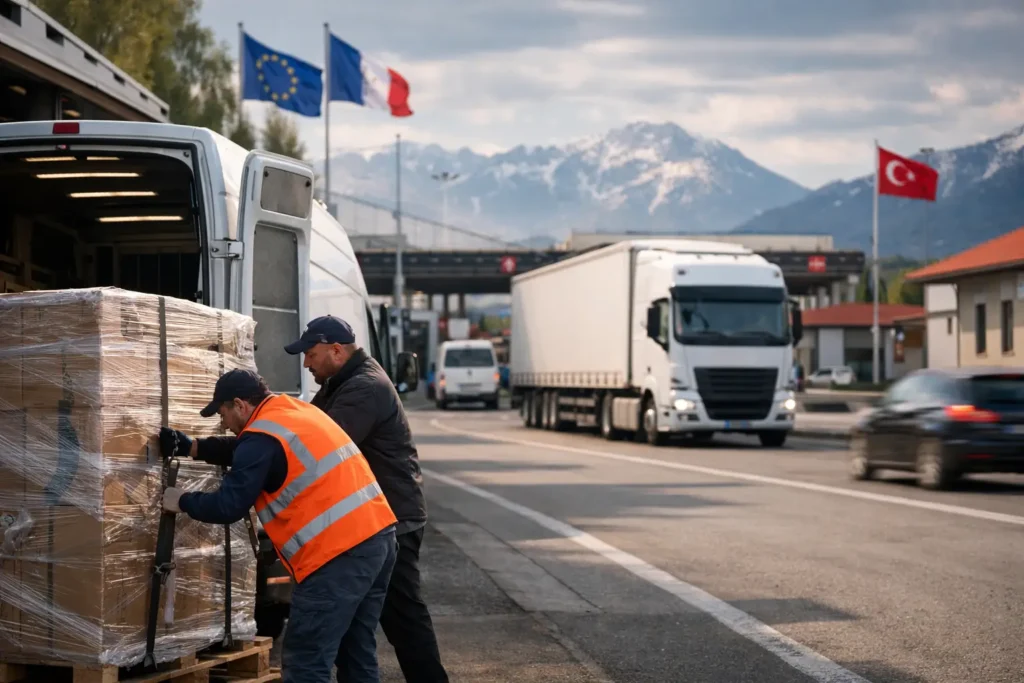
A production line in Birmingham is waiting for a replacement component from northern Italy. A distributor in France needs stock released before a customer shutdown. A shipment to Switzerland is held up by one missing customs reference. In these situations, choosing among the best urgent delivery options is not simply about paying for speed. It is about selecting the right vehicle, route, customs plan and level of control for a delivery window that cannot move. For supply chain managers, the real objective is delivery-time certainty with clear accountability from collection through to proof of delivery.
Best urgent delivery options: match the service to the risk
The fastest service is not always the most appropriate one. An urgent consignment should be assessed against its weight, dimensions, handling requirements, collection readiness, route complexity and the consequences of a late arrival. A dedicated vehicle is often the strongest choice when the shipment is critical, because it travels directly from collection to delivery without hub handling, pallet exchanges or co-loading delays.
For small but high-value parts, a dedicated express van can be the most effective option. It can collect rapidly, run door to door and reach many European destinations within hours or by the following day. For heavier pallets, industrial machinery parts or multiple loading metres, an express lorry may be necessary. The transit can still be highly time-critical, but vehicle availability, driving-time rules and loading restrictions need to be planned from the start.
The main urgent options normally fall into three operational categories:
- Dedicated express van for compact, high-priority freight requiring direct movement.
- Dedicated express lorry for urgent palletised freight, industrial loads or larger volumes.
- Time-definite road transport for consignments that must arrive on a specific day or before an agreed delivery slot.
- Specialist urgent transport for oversized, heavy or non-standard freight where speed must be balanced with permits, escorts or loading equipment.
The operational insight is straightforward: urgency should determine the transport design, not just the collection time. Sending a 10-pallet shipment in a van may look fast on paper, but it creates an avoidable capacity problem. Equally, assigning a full lorry to a single small component may add cost without improving the delivery outcome.
When a dedicated van is the right urgent transport choice
A dedicated van is usually the preferred option for critical parts, samples, tools, electronics and small consignments that must move immediately. The vehicle collects only your freight and travels on the agreed route, allowing the transport team to monitor progress closely and react if a border, traffic incident or customer delivery restriction affects the plan.
Consider a manufacturer in the Netherlands with a failed automation component needed at a plant near Lyon. The part weighs 180 kg and can be loaded safely in a dedicated van. Rather than waiting for a scheduled groupage departure, the vehicle can collect from the supplier, travel directly to France and deliver to the maintenance team within the agreed recovery window. The cost is higher than standard freight, but the calculation changes when every hour of downtime affects production output.
Dedicated vans also reduce handling risk. Each terminal movement introduces another potential delay, particularly where freight is fragile, confidential or difficult to replace. This is valuable for consignments travelling to remote areas of Scandinavia, where daily linehaul schedules may be less flexible and onward delivery capacity can be limited.
However, a van is not an automatic answer. Loading capacity, payload, packaging dimensions and securement requirements must be checked before booking. If the goods are long, unusually heavy or require a forklift at both ends, a larger express vehicle may provide a safer and more reliable solution.
Express lorries for urgent pallet and industrial freight
Where a shipment cannot fit safely into a van, an express lorry provides the capacity needed without reverting to a standard, multi-stop network. This is particularly relevant for industrial suppliers moving replacement assemblies, metal components, urgent production stock or time-sensitive export orders.
A dedicated lorry can carry a larger payload and accommodate pallets, crates and equipment requiring side or rear loading. It can also be planned around collection and delivery appointments, which matters when production sites have strict booking systems or limited unloading windows. The priority is not merely speed on the road. It is ensuring that the vehicle type, loading method and driver instructions support the deadline.
For urgent movements, a realistic schedule should account for legal driving and rest periods. A 24-hour target does not mean a lorry can travel continuously without constraint. For longer distances, a relay arrangement, two-driver operation or carefully planned collection timing may be required. An eight-hour delay uses one third of a 24-hour delivery window, so waiting until paperwork or freight is ready before arranging the vehicle can remove the margin that makes express transport effective.
For high-value freight, ask for clear confirmation of collection time, direct-delivery status, vehicle details and milestone updates. These details allow procurement and operations teams to manage customer expectations rather than chasing information after a problem occurs.
Customs can decide whether urgent freight arrives on time
The most demanding urgent routes are often not the longest ones. They are the routes with a border process that can interrupt an otherwise well-planned road movement. The UK, Switzerland and Turkey all require documentary preparation that must be correct before the vehicle reaches the border.
For a UK-bound express shipment, the transport plan should confirm the commercial invoice, commodity details, customs declarations, importer information and any required reference numbers before collection. A vehicle that reaches Dover quickly but waits because the import entry is incomplete is no longer an express solution.
Switzerland creates a similar challenge. Although geographically central to European road freight, it is outside the EU customs union. Export and import formalities need to align with the physical crossing, while delivery hours, local restrictions and border operating procedures can influence the practical route.
Turkey and Caucasus movements demand even more preparation. Border waiting times can vary, and the availability of correct transit documentation, product information and consignee instructions is central to delivery performance. For urgent shipments, confirm these points at quotation stage rather than treating customs as an administrative detail after the vehicle is allocated.
A useful rule is to separate transit time from border time. A route planner can estimate road kilometres accurately, but customs clearance depends on the quality and readiness of the documentation. The best urgent delivery options combine direct transport with pre-checked documents and a named team able to communicate with the shipper, consignee and customs parties.
How to brief an urgent freight provider properly
Urgent transport fails most often because the brief is incomplete. A fast quotation and quick vehicle allocation are valuable, but only if the essential operating details are available. Provide the collection and delivery postcodes, contact names, ready time, freight weight, dimensions, number of pallets, stackability, goods description and any loading constraints.
It is equally helpful to state the consequence of delay. Is the consignment needed before a production shift starts? Does the receiver close at 16:00? Is there a vessel connection, a planned installation or a customer penalty? This information allows the transport provider to recommend an appropriate option rather than simply quoting the fastest available vehicle.
For complex loads, include photographs and confirm whether loading equipment is available. A 2.8-metre crate may require a different vehicle and securing plan from standard pallets, even if both shipments have the same total weight. The same applies to regulated materials, temperature-sensitive products and confidential components: the transport plan must reflect the real risk profile.
Choosing speed without losing cost control
Urgent road freight costs more because capacity is reserved, routes are direct and operational attention is higher. Yet the cheapest urgent quote is not always the lowest-cost decision. A lower rate can become expensive if it relies on uncertain availability, unplanned transhipments or unclear customs responsibility.
The right approach is to compare the delivery commitment behind the price. Ask whether the vehicle is dedicated, whether the service is direct, what information will be provided during transit and who takes ownership if collection or border issues arise. For recurring urgent lanes, share expected volumes and route patterns. This can help build a practical escalation plan before the next disruption occurs.
MAP Transport has managed international road freight since 1985, coordinating standard, express and exceptional movements across Europe and on complex routes towards Turkey and the Caucasus. For an urgent shipment, the value lies in matching the vehicle and service level to the operational deadline, then maintaining clear follow-up until delivery.
The best decision is usually made before the emergency call: keep shipment data current, identify the customs documents your key routes require and agree internally on who can authorise an express move. When the critical consignment is ready, minutes matter.
Need support on your transport flows? Contact our team for a tailored solution.
Have a question or need a quote? Contact us at (+34) 943 62 95 77 (ask for Raquel) or by email at lo*******@**********rt.com