
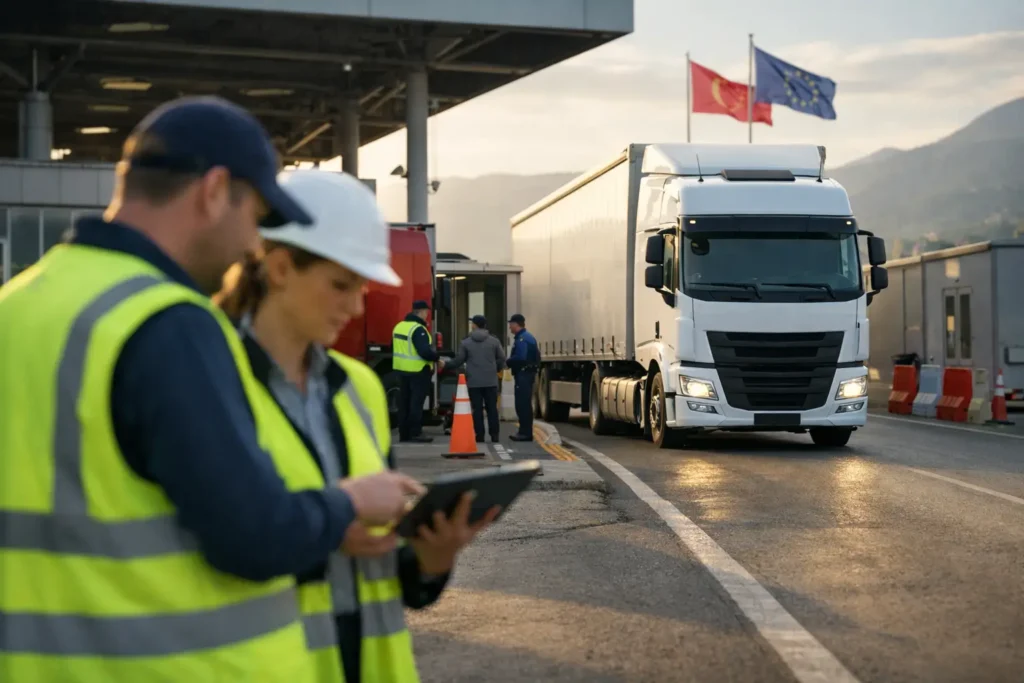
A production line waiting on one delayed pallet from Turkey or a customer in the UK chasing an ETA for a time-critical delivery – this is where supply chain optimisation stops being a boardroom phrase and becomes an operational necessity. For logistics managers, the pressure is familiar: keep transport costs under control, reduce disruption, and still deliver on time across borders that do not always move at the same speed. In European road freight, optimisation is rarely about one big change. It usually comes from tighter planning, better route choices, clearer customs preparation, and faster decisions when something shifts mid-transit.
Where supply chain optimisation really pays off
In cross-border road freight, the biggest gains often come from reducing avoidable friction rather than chasing the lowest rate on paper. A cheaper movement can quickly become an expensive one if it creates demurrage, missed unloading slots, production stoppages or penalty clauses. That is especially true on more complex flows involving the UK, Switzerland or Turkey, where customs processes can add hours or days if documentation is not aligned before departure.
According to the European Commission, road freight remains the dominant mode for inland goods transport in Europe, which means small inefficiencies scale quickly across regular flows. If a business runs several weekly shipments across multiple countries, even a recurring two-hour delay at a border crossing can affect customer service, labour planning and stock cover. Supply chain optimisation in this context means treating transport as a performance lever, not just a purchased service.
A practical example is an industrial supplier moving standard goods from northern Spain into southern Germany, while also sending urgent replacement parts to the Czech Republic and occasional machinery loads into Turkey. These are not the same transport problems. Trying to manage them with one fixed service model usually creates waste. The better approach is to match the urgency, cargo profile and route complexity to the right execution plan from the start.
Use the right transport model for the shipment
One of the most common mistakes in road freight is forcing all movements into the same planning logic. Standard replenishment, urgent line-down freight and oversized cargo have different risk profiles, and each needs a different operational response. This is a core part of supply chain optimisation because the wrong transport model usually shows up later as extra cost, service failure or both.
For routine shipments, consistency matters more than speed at any price. The focus should be on reliable collection windows, realistic lead times, and strong milestone visibility. For urgent transport, the priority shifts. Here, a van or dedicated lorry can be the right choice if the cost of delay is higher than the premium paid for express service. In many manufacturing settings, that trade-off is straightforward. If one missing component can stop production, paying more for delivery within hours is often the cheaper option overall.
Exceptional shipments add another layer. Heavy, oversized or non-standard loads require route checks, permits, timing control and close communication with loading and unloading points. Optimisation here is not about moving faster. It is about avoiding failed collections, route restrictions and compliance issues that create long and costly interruptions.
An operational insight worth keeping in mind: the best transport plan is not always the fastest one. It is the one that fits the commercial and operational consequence of delay.
Customs is often the hidden bottleneck
For many European shippers, customs remains the least forgiving part of the transport chain. It becomes critical on routes involving the UK, Switzerland and Turkey, where road freight performance depends heavily on document accuracy and timing. A trailer can be ready, the driver can be on schedule, and the whole movement can still stall because one reference, tariff code or supporting document is missing.
This is why supply chain optimisation should include customs readiness as part of transport planning, not as an afterthought. If commercial invoices, packing data, origin details or special declarations are checked only after the vehicle is booked, the risk of delay rises sharply. The same applies to returns, temporary movements and goods with specific compliance requirements.
A concrete example: a shipment of industrial components from France to the UK may look straightforward until the importer’s EORI details do not match the customs entry, or the paperwork does not reflect the exact goods description. What follows is familiar – the vehicle waits, the customer asks for updates, and the transport team starts solving a preventable problem under time pressure.
The better approach is simple but disciplined. Validate customs data before collection, confirm who is responsible for each declaration, and build in route-specific checks for border-sensitive lanes. On these flows, speed comes from preparation.
Better visibility improves faster decisions
Most delays are not created by the delay itself. They become costly because the information arrives too late for anyone to react. That is why visibility is one of the most practical parts of supply chain optimisation in road freight. It allows supply chain teams to protect unloading slots, adjust production plans, update customers and decide whether a shipment needs intervention.
This does not mean flooding people with tracking updates. Useful visibility is selective and actionable. A logistics manager needs to know whether the goods collected on time, whether the vehicle is on track to meet the agreed ETA, and whether a customs or route issue requires a decision. Beyond that, constant noise adds little value.
For urgent transport, this matters even more. If a manufacturer needs replacement parts delivered across Europe in under 24 hours, every handover and every hour counts. A responsive transport partner should be able to confirm status quickly, escalate exceptions early and provide realistic arrival times rather than optimistic guesses. That level of communication reduces secondary disruption across the customer’s own operation.
In practice, strong follow-up often matters as much as fleet access. Capacity can be sourced. Reliable coordination is harder to replace.
Reduce cost without damaging service levels
Cost control is part of supply chain optimisation, but cost cutting is not the same thing. Experienced shippers know that transport savings can disappear fast when service performance drops. The real objective is to reduce waste while protecting delivery certainty.
There are several ways this works in road freight. Better load planning can reduce empty space and avoid sending the wrong vehicle. More realistic lead times can prevent expensive last-minute upgrades. Consolidating regular flows may help, but only if it does not create avoidable delay at destination. On the other hand, splitting urgent and non-urgent freight often improves both cost and service because it stops premium transport from being used where it is not needed.
One useful benchmark comes from regular lane analysis. If the same route repeatedly generates waiting time, failed collections or customs queries, that is not bad luck. It is a process issue. Fixing recurring friction points usually delivers more value than negotiating another small rate reduction.
This is particularly relevant for companies shipping into Scandinavia, the UK or Turkey, where lead times are shaped by geography, border controls and limited margin for planning errors. On these lanes, the cheapest quote can become the most expensive shipment if service recovery is poor.
Build optimisation around exceptions, not just routine flows
Routine freight keeps operations moving, but exceptions are where transport performance is tested. A missed collection before a plant shutdown, a late Friday request for delivery on Monday morning, or a non-standard load needing specialist handling – these are the moments that reveal whether a supply chain is truly optimised.
Too many transport set-ups are designed for the average shipment and then struggle when urgency or complexity appears. A stronger model keeps contingency built into the process. That means knowing when to switch from standard to express, when customs input is needed before loading, and when a specialised vehicle or route plan should be arranged early.
Since 1985, MAP Transport has worked with shippers that need this flexibility across European and near-European road flows. The value is not just moving freight from A to B. It is matching each movement to the right service level, maintaining visibility throughout transit, and managing the kind of exceptions that can put cost, lead time and customer commitments at risk.
If you are reviewing your own transport set-up, the useful question is not whether every shipment is optimised. It is whether your operation can handle the shipments that are most likely to hurt performance when something changes.
Need support on your transport flows? Contact our team for a tailored solution.
Have a question or need a quote? Contact us at (+34) 943 62 95 77 (ask for Raquel) or by email at lo*******@**********rt.com