
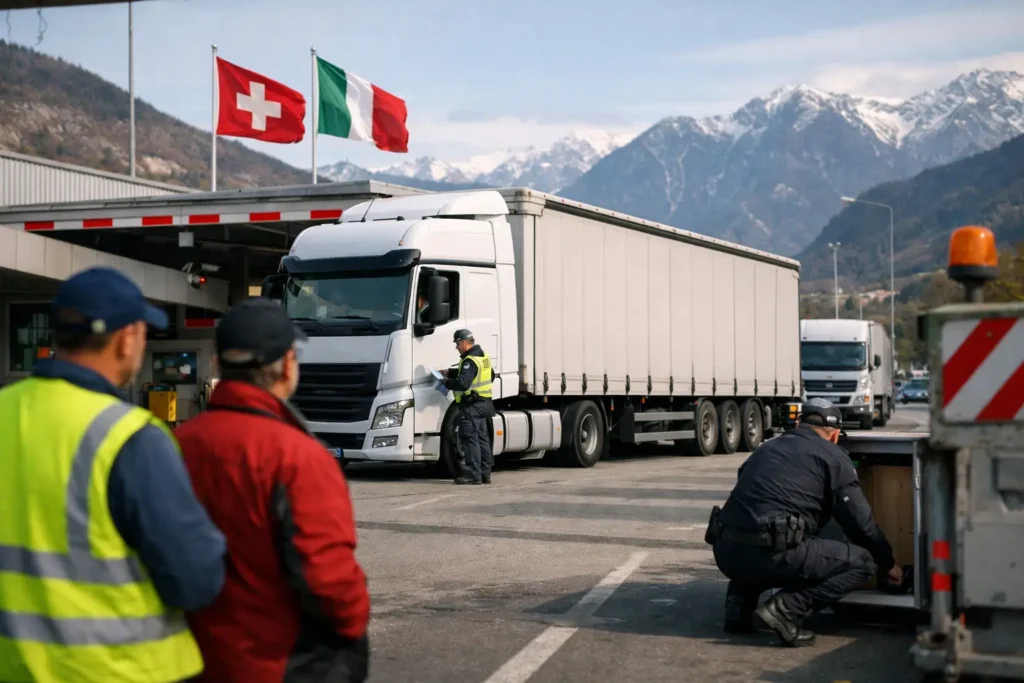
A delivery to Italy can look straightforward on paper and still go off schedule by a full day once it reaches the last stretch. The issue is rarely just distance. More often, it is a mix of tight unloading windows, traffic restrictions, mountain crossings, incomplete paperwork or a vehicle that does not match the shipment profile. For supply chain teams managing regular imports or urgent industrial deliveries, road freight to Italy is less about booking space and more about controlling risk. That is where planning, route choice and clear operational follow-up start to matter.
Why road freight to Italy needs tighter planning than many teams expect
Italy is one of Europe’s largest manufacturing economies, with strong demand across automotive, machinery, food, packaging, chemicals and consumer goods. According to Eurostat, Italy remains among the EU’s biggest trading countries, which means dense freight flows and pressure on road capacity around key industrial areas. In practice, that translates into congestion near Milan, Bologna, Verona and other major logistics corridors, especially when delivery slots are narrow.
For many shippers, the real challenge is variability. A standard movement from Benelux, France, Germany or Spain into northern Italy may run smoothly one week and face disruption the next because of weather in Alpine corridors, weekend driving rules, urban access limits or consignee-specific booking constraints. If the load is moving onwards to central or southern Italy, timing becomes even more sensitive.
This is why road freight to Italy works best when the transport plan is built around the actual goods, receiver requirements and deadline, rather than a generic linehaul model. A palletised industrial shipment, an urgent spare part and an oversized machine component do not need the same vehicle, route or communication rhythm.
The main causes of delay on road freight to Italy
The first issue is often routing. Many shipments into Italy depend on Alpine crossings, and those corridors are efficient until they are not. Seasonal weather, traffic density, infrastructure works and control measures can quickly change transit conditions. If your production line is waiting on a component, a two-hour delay at a crossing point can have a much bigger cost than the freight rate difference between two transport options.
The second issue is delivery scheduling. Italian consignees, especially in manufacturing and distribution, often work with precise unloading appointments. Missing a slot may not mean delivery later the same day. In some cases, it means the next day, with storage, waiting time or production impact added on top.
The third is documentation quality. Within the EU, road transport is simpler than customs-controlled traffic, but simple does not mean forgiving. Incorrect references, unclear consignee details, incomplete goods descriptions or missing handling instructions still create avoidable delays. If the movement involves the UK, Switzerland or Turkey before reaching Italy, customs becomes a serious planning factor rather than an admin afterthought.
A common example is a supplier shipping urgent machine parts from the UK to a plant near Turin. The road leg itself may be fast, but if customs data is submitted late or commodity details do not align across documents, the shipment can lose hours before it even reaches the Italian leg. In urgent transport, those hours matter more than the kilometres.
Choosing the right service level for road freight to Italy
Not every shipment to Italy should move on the same basis. This is where many procurement teams lose time and money. They either overpay for urgency they do not need or under-specify a movement that actually has a hard operational deadline.
For regular restocking, a classic full-load or part-load road service is often the right fit. It gives cost control and predictable planning when lead times are realistic. For higher-value or time-critical freight, a dedicated express van or direct lorry can be the safer option because it reduces handling points and gives tighter control over transit.
There is also the question of exceptional freight. Industrial businesses shipping oversized equipment, long metal pieces or heavy machinery into Italy need more than capacity. They need route checks, permit planning and coordination that reflects local delivery conditions. A low bridge, restricted approach road or city access rule can affect the whole movement.
An operational insight that gets overlooked is vehicle matching. Sending a standard vehicle because it is available fastest is not always efficient if the consignee has unloading limits, the goods require added protection or the route includes restrictive access. Good planning starts with dimensions, weight, loading method and urgency, then works backwards to the vehicle and route.
Customs and cross-border complexity still matter
If your freight starts and ends inside the EU, customs may not be the headline risk. But many supply chains serving Italy are not that simple. Components can originate in the UK, Switzerland or Turkey and move by road into Italy as part of wider European production flows. That is where customs preparation directly affects delivery performance.
For UK-Italy traffic, border planning remains essential. The same applies to Swiss-Italy lanes, where documentation discipline and timing at border points can make the difference between a clean transit and an avoidable queue. With Turkey-Italy traffic, lead time expectations also need to reflect border procedures, not just driving distance.
This is one reason experienced shippers look for a freight partner that can coordinate the whole movement, not just the transport leg. A fast quote matters, but so does checking whether the commercial invoice, packing data, customs references and delivery instructions are aligned before departure. The IRU and European Commission both continue to highlight how border friction and compliance checks affect road freight reliability across international corridors.
For supply chain managers, the practical takeaway is simple: if the route to Italy touches a customs border at any point, build that into your deadline from the start. Do not treat customs as a variable to solve once the vehicle is already loaded.
How to reduce risk on shipments to Italy
The strongest transport plans tend to share the same traits. They define the delivery requirement clearly, they choose the service level based on business impact, and they keep communication tight from collection to final unloading.
That means confirming more than postcode and pallet count. You need the exact goods profile, dimensions, stackability, site constraints, unloading method and any booking reference required by the consignee. If the shipment is urgent, the cut-off for decision-making should also be clear early on. Waiting half a day to approve a quote on a same-day or next-day movement can remove the operational advantage of express transport.
It also helps to think in scenarios rather than promises. If a Friday delivery to northern Italy is critical, ask what happens if the crossing route is disrupted or the unloading window moves. If a production plant cannot absorb delay, a dedicated vehicle with direct follow-up may be worth more than the cheapest available option.
One practical example: a manufacturer shipping replacement parts from eastern France to a customer in the Bologna area may choose a standard groupage movement to save cost. That works if the delivery is flexible. If the same parts are needed to restart a stopped line, moving them by dedicated express road service becomes a cost-control decision, not a premium extra. The transport price is higher, but the business loss from downtime is often far higher.
What good road freight coordination to Italy looks like
Reliable delivery to Italy is usually the result of small operational decisions made well. Fast response on quoting, realistic transit advice, the right vehicle, document checks before loading and active follow-up in transit all reduce risk. None of that is flashy, but it is what keeps cross-border freight on time.
For businesses shipping regularly into Italy, consistency matters just as much as speed. A provider should be able to handle standard shipments, urgent movements and more complex loads without forcing every job into the same model. That flexibility is especially useful when your transport mix includes routine deliveries one week and critical line-stopping freight the next.
Since 1985, MAP Transport has built its work around that kind of fit-for-purpose coordination across European road freight, including shipments that involve urgent timing, customs-sensitive routes and specialised handling requirements. For supply chain teams, that means fewer assumptions and better control over what happens between collection and delivery.
Road freight to Italy rewards preparation more than optimism. If the shipment is commercially important, treat routing, paperwork and delivery conditions as part of the transport itself, not as details to tidy up later. Need support on your transport flows? Contact our team for a tailored solution.
Have a question or need a quote? Contact us at (+34) 943 62 95 77 (ask for Raquel) or by email at lo*******@**********rt.com