
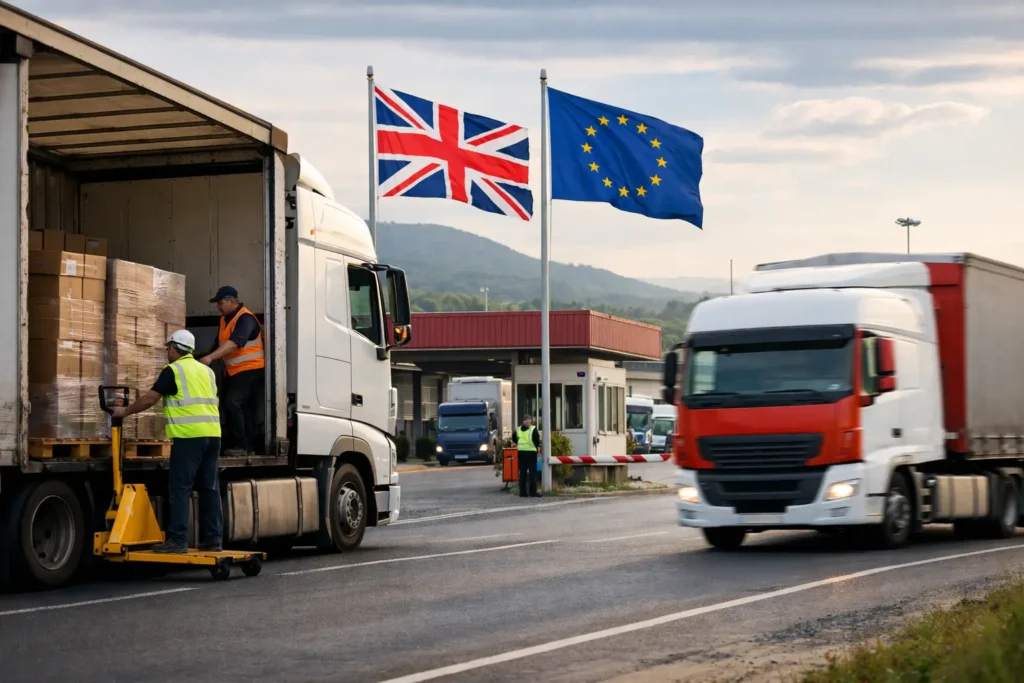
A rate that looks acceptable on paper can become expensive once customs waiting time, missed booking slots and the wrong vehicle choice start eating into the move. That is why UK-EU import/export road freight costs are rarely just about kilometres. For supply chain managers moving goods between the UK and the Continent, the real question is what drives the final landed transport cost – and what can still be controlled before the shipment is booked. If you are balancing service levels, margin pressure and delivery commitments, the detail behind the quote matters as much as the figure itself.
What really drives UK EU import export road freight costs
The biggest mistake buyers make is treating road freight pricing as a simple rate-per-mile exercise. On UK-EU flows, cost is shaped by a mix of transport, border process and service design. Distance still matters, of course, but it is only one variable.
Customs formalities are now a permanent cost factor. Every import or export movement needs correct documentation, and if paperwork is incomplete, the direct rate can quickly be overtaken by storage, waiting time or a failed crossing. HMRC and the European Commission both set out the formal requirements clearly, but operationally the cost impact comes from delays and rework rather than the declaration fee alone.
Lead time is another major lever. A standard groupage or full-load movement booked with notice will usually price very differently from an urgent van or dedicated lorry collected the same day. That sounds obvious, but many businesses still compare those options as if they were equivalent services. They are not. The true comparison is cost against risk – especially when a delayed delivery could stop production or miss a customer slot.
Vehicle matching also changes the number materially. A shipment that could move in a van but is booked on a larger dedicated vehicle may be over-specified. Equally, trying to save money by consolidating freight that really needs direct delivery can create hidden costs later in the chain.
Customs friction is now part of the cost base
The UK-EU route has changed permanently since Brexit. Even when duties are not payable, border compliance still carries a cost in administration, timing and coordination. According to UK government trade reporting, the EU remains one of the UK’s largest trading partners, which means the pressure on these corridors remains high and small inefficiencies scale quickly.
For operators, the cost question is not just whether customs declarations are filed. It is whether the shipment data is accurate early enough to prevent disruption. Commodity codes, origin statements, EORI numbers and delivery terms all affect the movement. If one element is wrong, the transport plan can unravel at the border.
A common example is a UK exporter sending industrial components to northern France on a tight delivery window. The linehaul cost may be competitive, but if the exporter provides incomplete invoice data and the declaration has to be amended while the vehicle is queued, the total cost increases immediately. You pay in driver time, missed unloading slots and internal escalation. In practice, poor document readiness is one of the fastest ways to inflate UK-EU import/export road freight costs.
For businesses moving regular traffic, this is where process discipline beats rate shopping. A carrier with strong customs coordination can often protect cost better than a cheaper headline quote with weaker follow-up.
The route and service level make a bigger difference than many buyers expect
Not all UK-EU lanes behave the same. London to Lille is not priced or managed like Birmingham to Milan, and neither resembles a movement from Manchester to southern Spain with a delivery booking requirement. Ferry availability, Channel crossing choice, road restrictions, urban access rules and final-mile constraints all influence the final figure.
There is also a sharp difference between standard and urgent transport. If a manufacturer in the Midlands needs replacement parts delivered to Belgium within hours to avoid production downtime, the cost of a dedicated express van will be much higher than a standard planned movement. Yet measured against the cost of a halted production line, that premium may be entirely justified.
This is where service categories matter. Standard freight works when lead times are realistic and loading plans are stable. Express and time-critical services become cost-efficient when delay is more expensive than transport. Exceptional or non-standard shipments bring a different cost logic again, because permits, routing checks and specialist handling all come into play.
If you want a clear view of service fit, it helps to review options like road freight services and match them to the operational consequence of delay rather than to budget alone.
Hidden costs often sit outside the quoted rate
A transport quote usually covers the visible movement, but the most painful costs are often indirect. These are the charges and losses that appear once the shipment starts moving.
The most common examples include waiting time at collection or delivery, failed customs clearance, re-delivery after a missed slot, demurrage linked to border delay and internal labour spent resolving avoidable issues. On some flows, the cheapest booked rate becomes the most expensive move once exceptions are counted.
One operational insight that experienced shippers know well is that late information is expensive information. If dimensions, pallet count, commodity details or collection readiness change after planning, the carrier may need to switch vehicle type or crossing schedule. That can trigger not only a rate amendment but a loss of routing efficiency.
This matters especially on complex routes or mixed shipment profiles. A distributor moving regular pallets one week and oversized industrial equipment the next should not expect a one-size-fits-all pricing model. Tailored planning is often what prevents exceptional cost events.
For teams reviewing spend, it is worth separating transport cost into two buckets: quoted linehaul and exception cost. That gives a much more honest view of where money is actually being lost.
How to control UK EU import export road freight costs without adding risk
The best savings usually come before the vehicle is dispatched. Cleaner data, earlier booking and a better fit between shipment and service can reduce spend without undermining reliability.
First, tighten shipment readiness. Confirm weights, dimensions, collection hours, commodity data and Incoterms before requesting a quote. That allows a transport partner to choose the right vehicle and border plan at the start, rather than correcting it later at a higher cost.
Second, segment your flows properly. Not every shipment needs the same service level. Routine imports from Germany into the UK may suit a classic planned service, while a same-day parts movement into the Netherlands may justify urgent dedicated transport. When businesses classify all freight as urgent, they usually overspend. When they classify everything as standard, they often pay in delay.
Third, build around predictability where possible. Even a small amount of forecasting can improve price and availability on UK-EU lanes. If your provider knows recurring volumes, destinations and peak periods, they can plan better and react faster when exceptions happen.
Finally, choose a partner that communicates operationally, not just commercially. Fast quoting matters, but so does clear follow-up once the goods are in transit. For many logistics managers, cost control improves simply because they spend less time chasing updates and fixing avoidable failures. Businesses with regular cross-border traffic often see the difference when they move from ad hoc booking to a more structured transport setup through a dedicated contact team or a direct quote request process.
A realistic benchmark starts with the right questions
There is no honest single answer to the question, “What should UK-EU road freight cost?” The range is too wide. A dedicated van from the UK to western Europe for urgent goods, a full-load industrial movement to Germany and an oversized shipment requiring specialist planning all sit in different cost brackets.
A better benchmark starts with a few practical questions. Is the load standard or non-standard? Is customs data complete? How tight is the delivery window? Is direct delivery necessary? What is the cost of delay to your operation or your customer?
Those questions tend to reveal whether the lowest quote is actually the best buying decision. In cross-border freight, price only makes sense when matched to the operational requirement.
For businesses shipping between the UK and Europe, the strongest cost position usually comes from reducing friction rather than chasing the cheapest possible rate. That means better documentation, better service selection and better coordination from collection to delivery. With 40 years of experience in European road freight, MAP Transport supports companies that need that level of control on standard, urgent and complex cross-border flows.
Need support on your transport flows? Contact our team for a tailored solution.
Have a question or need a quote? Contact us at (+34) 943 62 95 77 (ask for Raquel) or by email at lo*******@**********rt.com